Explaining what is a major tournament.

What Makes a Tournament a Major

I remember sitting in my bedroom at sixteen, staring at a grainy stream of a regional qualifier, wondering why everyone was losing their minds over a bracket that looked like it was drawn in MS Paint. Most people will try to sell you on the idea that a “Major” is just a fancy word for a big prize pool or a flashy stage with LED strips, but that’s mostly just marketing fluff designed to inflate viewership numbers. If you’re actually trying to figure out what is a major tournament in the context of professional play, you have to look past the pyrotechnics. It isn’t just about the money; it’s about the specific weight those wins carry in the rankings and whether the organizers actually have the infrastructure to prevent a technical meltdown mid-set.

I’m not here to give you a Wikipedia definition or a list of adjectives that don’t mean anything. My goal is to strip away the hype and show you the actual mechanics of high-stakes esports—from the tier-one prestige to the logistical nightmares that can ruin a weekend. I’ll tell you exactly how these events function, why some “Majors” are total scams, and how to tell the difference between a legitimate milestone and a glorified local LAN.

Table of Contents

Cracking the Code of the Pro Circuit Roadmap

Cracking the Code of the Pro Circuit Roadmap

If you’re looking at a pro circuit roadmap and feeling lost, don’t sweat it. It isn’t just a random calendar of events; it’s a structured climb. Think of it like a professional sports hierarchy applied to pixels. You start in the weeds with weekly online qualifiers or small-scale regional cups—the kind where the prize pool might barely cover your electricity bill. From there, you’re grinding for points to climb through specific tournament ranking systems that dictate who actually gets a seat at the table when the big money shows up.

The goal isn’t just to win a trophy; it’s about securing your spot in the elite competition structure that defines a career. You move from “local hero” to “circuit regular,” and eventually, you’re fighting for championship prestige in events that actually move the needle. It’s a massive filter designed to weed out the lucky players from the ones who can actually perform under pressure. If you can’t maintain your mechanical consistency when the viewership jumps from a hundred to a hundred thousand, the roadmap will chew you up and spit you out.

Tournament Ranking Systems vs the Marketing Spin

Tournament Ranking Systems vs the Marketing Spin

Here’s the thing: every developer wants you to believe their upcoming event is the pinnacle of human achievement, but you have to look past the cinematic trailers. They’ll use words like “legendary” or “unprecedented” to mask the fact that the prize pool is actually quite small or the invite list is just a list of their sponsored partners. To figure out if an event actually matters, you need to ignore the hype and look at the tournament ranking systems in place. If the win doesn’t move a player up a measurable ladder or contribute to a seasonal standings sheet, it’s just a glorified exhibition match, not a pillar of the scene.

Real legitimacy comes from a structured elite competition structure that mirrors a professional sports hierarchy. In tennis, you have the grand slam definition—four specific, massive events that define a career. In esports, we’re still fighting for that level of consistency. A true major isn’t just a big party; it’s a gatekeeper. It’s where the points actually count, the stakes are baked into the season’s progression, and the prestige is earned through math, not just a flashy broadcast.

How to Spot a Real Major Before You Waste Your Weekend

  • Ignore the prize pool for a second. A massive cash stack doesn’t make a tournament “Major” if the player pool is just a bunch of regional grinders. Look for the invite list; if the top 50 players in the world aren’t fighting for the same trophy, it’s just a high-stakes exhibition, not a true circuit milestone.
  • Check the stability of the ecosystem. A real Major is part of a structured ladder, not a one-off event thrown together by a sponsor looking for quick clicks. If the win doesn’t actually move the needle on global rankings or qualification for the next big thing, you’re looking at a glorified invitational.
  • Watch the broadcast, but look past the flashy overlays. I’ve seen way too many “Major” events that are basically just glorified streamers playing in a room together. A legitimate tournament has standardized rulesets, professional officiating, and a way to settle disputes that doesn’t involve a moderator’s whim in a Twitch chat.
  • Look for the “Gatekeeper” effect. In a true Major, you shouldn’t be able to breeze through the bracket. The difficulty spike should be vertical. If the top seeds are playing with zero pressure and the same tactics they use in weekly scrims, the tournament lacks the competitive density that defines a premier event.
  • Verify the longevity of the hype. Real Majors create a “meta” shift. If the tournament ends and nobody is talking about the new strategies or the broken builds that emerged during the finals, it didn’t actually impact the game. A Major should change how the game is played for the next three months.

The Bottom Line: What You’re Actually Watching

Ignore the “World Championship” branding on every mid-tier stream; if it doesn’t have a tiered qualification system or a massive prize pool that actually changes players’ lives, it’s just a glorified local LAN with better lighting.

Major tournaments are the only time you see the true skill ceiling of a game, stripping away the “lucky shot” narratives to show how the top 0.01% actually optimize every single movement and resource.

Don’t mistake high production value for high stakes; a tournament’s importance is measured by how much it shifts the meta and how many pros are actually risking their season on the results.

## The Difference Between Hype and Hardware

“A major tournament isn’t just a fancy logo and a massive prize pool used to sell skins; it’s the only time the marketing fluff actually stops and you see if the game’s netcode can handle the pressure or if the players are actually elite or just lucky on a good stream.”

Denny Kowalczyk

The Bottom Line on the Big Stages

The Bottom Line on the Big Stages.

At the end of the day, don’t let the flashy overlays and the million-dollar prize pool announcements confuse you. A major tournament isn’t just a big party with high production value; it’s the specific point in the circuit where the mathematical probability of error drops to near zero and the skill ceiling hits the roof. We’ve looked at how the roadmap works and how to see past the marketing fluff, but the core takeaway is this: look for the stability of the ecosystem, not just the size of the trophy. If a tournament lacks a clear path for players to climb or relies entirely on hype to sell tickets, it’s just a glorified exhibition match, not a true pillar of the competitive scene.

Whether you’re watching from a couch or grinding ranked just to catch a scout’s eye, remember that these events are the ultimate stress test for both players and developers. They prove whether a game actually has the mechanical depth to survive at the highest level or if it’s just a flash in the pan. Don’t just follow the money; follow the competition. The real legends aren’t the ones with the most social media followers, but the ones who can hold their composure when the lights are brightest and the stakes are actually real.

Frequently Asked Questions

How can I tell if a tournament is actually a "Major" or if the organizers are just using the label for hype?

Look at the prize pool, but don’t let the big number fool you—check the distribution. If 90% of the cash goes to one superstar and the rest of the bracket gets gas money, it’s a glorified exhibition, not a Major. Real Majors have deep tiers and, more importantly, they invite the top-ranked players via points or qualifiers, not just whoever paid the entry fee. If the “Major” label is the only thing they’re selling, run.

Does winning a Major actually change a player's career, or is it just about the immediate prize pool?

Look, if you’re just chasing the prize pool, you’re playing the wrong game. The cash is great for a few months, but the real value is the “Major Winner” tag on your profile. It’s the difference between being a Tier 2 grinder and someone brands actually want to sponsor. A Major win is a permanent credential that secures your spot in the circuit long after the trophy gathers dust. It’s career insurance.

How much of the tournament structure is determined by the game developers versus independent organizers?

It’s a tug-of-war. Most big titles—think Riot or Blizzard—run a closed loop where the devs hold the keys, dictate the rules, and basically own the ecosystem. They want control. But then you’ve got the third-party scene, like ESL or DreamHack, where independent organizers step in to fill the gaps. They bring the production value, but they’re often playing by the developer’s house rules, hoping the game doesn’t get a balance patch mid-season.

Explaining what is a graphics api.

Graphics Apis: Directx, Vulkan and Why It Matters

I spent three years in a CS degree learning how to talk about code in ways that make professors feel important, but I dropped out because I realized most of that theory doesn’t help you when your 4080 is stuttering in a heavy combat scene. Most tech sites will give you a textbook definition of what is a graphics api that reads like a legal disclaimer, leaving you more confused than when you started. They’ll tell you it’s a “set of protocols,” but they won’t tell you that a poorly optimized API is the reason your expensive hardware is essentially idling while your frame rates drop into the single digits.

I’m not here to rewrite a Wikipedia entry or sell you on some marketing buzzword. I’m going to break down how these translators actually function between your game engine and your silicon, focusing on how they impact your real-world performance. I’ll skip the academic fluff and give you the straight-up reality of how different APIs affect your latency and throughput. By the end of this, you’ll actually understand why choosing the right one matters more than just having the biggest spec sheet on the box.

Table of Contents

The Hardware Abstraction Layer Translating Code to Silicon

The Hardware Abstraction Layer Translating Code to Silicon

Think of the hardware abstraction layer as the middleman that prevents your game developer from having to write custom code for every single specific GPU model on the market. If they had to do that, we’d still be playing games that only work on one specific brand of silicon. Instead, the API acts as a standardized way to talk to the hardware. It takes the high-level instructions—like “draw a dragon here with these shadows”—and translates them into something the hardware actually understands. This process is what fuels the gpu rendering pipeline, turning abstract math into the pixels you see on your monitor.

When we talk about low-level graphics programming with newer APIs like Vulkan or DirectX 12, we’re basically giving the developer more direct control over how that translation happens. In the old days, the driver did most of the heavy lifting, which was easier for devs but often meant the hardware wasn’t being used to its full potential. Now, you can squeeze more performance out of your card, but if the code is messy, you’ll see those frame rates tank regardless of your specs. It’s a fine line between peak efficiency and total optimization chaos.

Graphics Driver Communication Why Your Software Actually Talks to Hardware

Graphics Driver Communication Why Your Software Actually Talks to Hardware

If the API is the translator, the driver is the actual logistics manager making sure the instructions don’t get lost in transit. You can have the most efficient code in the world, but if the graphics driver communication is clunky, your GPU is just sitting there waiting for orders while your frame times spike. When I’m testing a new build, I’m looking for that tight handshake between the game engine and the silicon. If the driver is poorly optimized, it creates a massive bottleneck that no amount of raw TFLOPS can fix.

This is where the magic—and the frustration—happens. The driver takes those high-level API commands and breaks them down into the specific, granular instructions that the hardware understands. This process feeds directly into the gpu rendering pipeline, turning math and logic into the actual pixels you see on screen. When I see a game stuttering despite having a high-end card, it’s usually because the driver is struggling to translate those commands fast enough, causing the entire pipeline to stall. It’s not a hardware failure; it’s a communication breakdown.

5 Things You Actually Need to Know (Before You Blame Your GPU)

  • Stop looking at the spec sheet and start looking at the API. A high-end GPU paired with a poorly optimized API (or a game that doesn’t use it properly) will give you stuttering frame times and massive CPU bottlenecks, no matter how many teraflops the marketing says it has.
  • Understand the “Overhead” trade-off. Low-level APIs like Vulkan or DirectX 12 give developers more control to squeeze out every single frame, but they also increase the chance of a buggy mess if the devs don’t know what they’re doing. High-level APIs are easier to work with but can act like a speed limiter on your hardware.
  • Driver updates aren’t just for “stability.” Most of the time, a new driver is actually an optimization patch for how the API talks to your specific silicon. If your frame rate is tanking in a new release, check if the driver is actually translating the API calls efficiently yet.
  • Don’t fall for the “Ray Tracing” hype without checking the API support. Ray tracing is incredibly heavy on the API; if the game is trying to force it through an older implementation or an unoptimized layer, you’re going to see your 144 FPS drop to a slideshow of 30 FPS.
  • Watch the CPU usage, not just the GPU. Because the API is the middleman, a bad one forces your CPU to work overtime just to tell the GPU what to do. If your GPU usage is sitting at 60% while you’re lagging, your API/driver communication is likely the bottleneck, not your graphics card.

The TL;DR on APIs

An API isn’t magic; it’s just the middleman. If the translation between the game engine and your GPU is inefficient, you’re going to see stuttering and low frame rates regardless of how much you spent on your rig.

Not all APIs are created equal. DirectX and Vulkan are the heavy hitters you actually care about, while older stuff like OpenGL is basically just trying to keep legacy hardware from dying.

Driver updates matter because they refine this communication. A good driver update can optimize how the API talks to your specific card, which is often the difference between a stable 60 FPS and a slideshow.

## The Bottleneck Reality

“Stop looking at the TFLOPS on the box for a second. A graphics API is the actual bridge between the game’s logic and your silicon; if that bridge is built poorly, you could have a top-tier RTX card and still be stuck staring at a stuttering mess because the CPU is too busy translating bad instructions to actually feed the GPU.”

Denny Kowalczyk

The Bottom Line: Why You Should Care

The Bottom Line: Why You Should Care

At the end of the day, a graphics API isn’t just some abstract layer of math; it is the literal bridge between a developer’s vision and the silicon in your rig. We’ve looked at how the hardware abstraction layer keeps things from breaking and how drivers act as the middleman to ensure your commands actually reach the GPU. If the API is efficient, you get high frame rates and low latency; if it’s poorly optimized, you could be sitting on a 4090 and still see stuttering that makes a slideshow look smooth. Understanding this helps you realize that your performance isn’t just about how much you spent on hardware, but how well that hardware is being spoken to by the software.

Stop looking at benchmarks as just a single number and start looking at the ecosystem behind them. When you see a game struggling despite “beating” the recommended specs, remember that the API is often the invisible bottleneck. Don’t let marketing hype tell you that more VRAM or higher clock speeds solve everything if the translation layer is a mess. Build smart, test your settings, and remember that true performance is found in the efficiency of the code, not just the size of your receipt.

Frequently Asked Questions

If I switch from DirectX 11 to DirectX 12, am I actually going to see a jump in my FPS, or is it just more overhead?

It’s not a magic button. If you’re on a high-end rig with a modern GPU, DX12 can slash CPU overhead and give you a more stable frame time—I’ve seen jumps from 65 to 80 FPS in CPU-bound scenarios just by switching. But if the game’s implementation is garbage, you’re just adding stutter. Don’t expect a miracle; if the dev didn’t optimize the calls, you’re just trading one headache for another.

Why do some games run like absolute garbage on Vulkan while others fly, even if I've got the same GPU?

It comes down to how much work the developers actually did. Vulkan is a “low-level” API, meaning it gives devs direct access to the hardware, but it doesn’t hold their hand. If a studio writes tight, efficient code that talks directly to your GPU’s cores, you’ll see those high frame rates. If they’re lazy and let the driver do the heavy lifting, you’ll get stutters and massive frame time spikes. It’s all in the implementation.

Does a better API actually make my hardware last longer, or is it just a way for devs to hide lazy optimization?

It’s both, but mostly it’s about efficiency. A modern API like Vulkan or DX12 lets devs talk to your GPU with way less CPU overhead. Instead of your processor choking on driver calls, the workload is spread out, meaning your hardware isn’t working twice as hard to do half the job. That keeps temps lower and extends your build’s lifespan. But yeah, devs definitely use better APIs as a crutch to mask messy code.

Explaining what is early access in gaming.

Early Access: When It Is Worth It and When You Are Funding a Ghost

I remember sitting there at 2 AM, staring at a flickering monitor while a game I’d just dropped forty bucks on crashed for the fifth time in an hour. The Steam page called it a “revolutionary preview,” but my hardware was screaming in agony and my wallet was definitely feeling the sting. People love to dress it up in fancy marketing terms, but if you’re asking what is early access, the honest answer is that you’re essentially paying to be a glorified beta tester. It’s a gamble where the house usually wins, and you’re the one providing the free QA labor to help devs fix the mess before the actual launch.

I’m not here to give you a corporate definition or a lecture on software development lifecycles. I’ve spent enough time tearing down machines and debugging broken builds to know when a developer is being transparent and when they’re just scrambling for cash. In this guide, I’m going to strip away the hype and show you how to spot the difference between a project with a real roadmap and a total money pit. I’ll give you the metrics that actually matter so you can decide if a game is worth your time or if you should just wait for the full release.

Table of Contents

Decoding the Steam Early Access Model

Decoding the Steam Early Access Model.

The Steam Early Access model isn’t some unified standard; it’s more like a wild west where the rules change depending on who’s holding the controller. At its core, it’s a way for devs to bypass the traditional gatekeepers and get cash flowing while they’re still in the middle of the game development lifecycle. For a small indie studio, this is a lifeline—it’s basically a way to fund the final stretch of polish using the very people who are going to play the finished product.

But you need to know what you’re actually buying into. You aren’t just paying for a game; you’re participating in different software development stages. Some devs use it for alpha vs beta testing, where they’re still figuring out if the core loop is even fun, while others are just using it to patch in content one DLC-sized chunk at a time. I’ve seen plenty of projects where the “Early Access” tag is just a way to keep the lights on while the actual gameplay is stuck in a loop of broken mechanics. You have to look past the storefront page and see if they’re actually building a game or just selling you a dream that might never reach 1.0.

Alpha vs Beta Testing Separating Hype From Reality

Alpha vs Beta Testing Separating Hype From Reality

Marketing teams love to blur the lines, but if you’re looking at the game development lifecycle, there’s a massive functional difference between these stages. An alpha build is essentially the skeleton; it’s often missing core mechanics, the UI is a mess, and you’ll probably encounter game-breaking bugs that make a 60 FPS target feel like a distant dream. When a dev sells an alpha, they aren’t just selling a game; they’re selling a vision that might still change completely.

Beta testing is a different beast. By this stage, the features are mostly locked in, and the focus shifts from “does this work?” to “how do we polish this?” In the context of alpha vs beta testing, a beta version should feel like a playable product, even if the balancing is off. If you’re buying a title that claims to be a beta but still lacks basic stability or fundamental loops, you aren’t a tester—you’re just an early adopter paying for the privilege of troubleshooting. Don’t let the shiny trailers fool you; check the build version before you hit buy.

How to Not Get Burned: My Rules for Buying Early Access

  • Check the update frequency, not the trailer. If the developer hasn’t pushed a patch or a single devlog in three months, that “upcoming feature” is a ghost. A dead roadmap is a dead game.
  • Read the “Recent Reviews” on Steam, not the “All Time” ones. You don’t care how much fun people had in the first week; you care if the latest build is currently a crashing mess that’s unplayable on your specific GPU.
  • Treat your money like a donation, not a transaction. When you buy early access, you’re essentially funding the dev’s electricity bill to finish the game. If you expect a polished AAA experience on day one, you’re going to be pissed.
  • Watch a raw gameplay clip before hitting buy. Don’t watch the cinematic trailer—that’s just high-budget lies. Find a YouTuber or a Twitch stream of someone actually playing the build to see how the frame rates hold up and if the UI is a disaster.
  • Know your “walk away” point. Decide beforehand if you’re okay with the game being delayed by another year or if the final product ends up being a different genre than what was promised. If you can’t stomach the risk, stick to the full release.

The Bottom Line: Is It Worth Your Buy Button?

Treat Early Access like a subscription to a dev diary, not a finished product; you’re paying for the vision and the right to complain, not for a polished experience.

Always check the “Last Updated” timestamp on the store page before you click buy, because a game that hasn’t seen a patch in six months is a dead project, not a “work in progress.”

Don’t fall for the “feature creep” trap—if the devs keep adding new mechanics instead of fixing the core loop, they’re just moving the goalposts to keep the revenue flowing.

The Early Access Reality Check

Look, Early Access isn’t a VIP pass to a finished product; it’s a transaction where you’re trading your cash and your patience for a seat at the dev table, and you’d better check the patch notes before you check out.

Denny Kowalczyk

The Bottom Line

The Bottom Line on Early Access risks.

Look, at the end of the day, Early Access is a massive gamble with your time and your wallet. You’ve seen the cycle: you buy into a title because the demo looked slick, only to realize you’re essentially paying to be a glorified beta tester for a project that might never actually reach a 1.0 release. If you can distinguish between a dev who is actively pushing patches and a studio that’s just using your money to keep the lights on while they ghost the community, you’ll do alright. Just remember that an Alpha is a promise of a foundation, while a Beta is a promise of polish—and neither is a guarantee of a finished game.

Don’t let the hype train or the shiny Steam screenshots dictate your spending. I’ve seen too many people dump eighty bucks into a “coming soon” masterpiece only to have it become digital shelfware when the studio loses funding. Use your head: check the patch notes, look at the player counts, and read the actual reviews instead of the press releases. If you treat Early Access as a way to support a vision you truly believe in rather than a way to get a discount on a broken product, you’ll actually end up having fun. Play smart, or don’t play at all.

Frequently Asked Questions

Is there a way to tell if a dev is actually updating the game or if they've just taken the money and vanished?

Check the developer logs and the community hub, not the trailer. If the last patch notes were from six months ago and the Discord is just a graveyard of “when update?” memes, run. I look for consistent cadence—even if it’s just small bug fixes. If they’re pushing builds every two weeks, they’re working. If the only “update” is a new skin pack for a broken game, they’ve already moved on to the next payday.

Should I wait for the 1.0 release to see if the performance is actually stable, or is it worth buying in now?

Look, if you’re chasing stability, wait for 1.0. Buying early means you’re essentially subsidizing the devs’ debugging process, and you’ll likely deal with frame drops and crashes that won’t be patched for months. However, if the game’s core loop is already solid and you’re okay with a buggy experience for a lower entry price, jump in. Just don’t expect a polished product; expect a work in progress that might break your hardware.

How much of a discount am I actually getting for playing a game that's still half-broken?

Look, the “discount” is usually a lie. If a game is $20 in Early Access but jumps to $40 at launch, you haven’t saved money; you’ve just pre-ordered a headache. I look at the price-per-hour of actual, uncrashable gameplay. If you’re paying 50% of the retail price but spending half that time staring at loading screens or bugged quest triggers, your effective discount is zero. Don’t pay full price for a broken product.

Diagram explaining how cloud gaming works.

How Cloud Gaming Works and Where It Falls Apart

I spent three years building rigs for people who thought “the cloud” was some magical, infinite reservoir of processing power that lived in the atmosphere. It’s not. I remember sitting there with a client, staring at a $2,000 build he’d just commissioned, only for him to ask if he could just stream everything via a subscription and save the cash. I had to break it to him: understanding how cloud gaming works isn’t about discovering a shortcut to high-end performance; it’s about realizing you’re trading your local hardware’s stability for a high-speed video stream that is entirely at the mercy of your ISP.

I’m not here to sell you on the dream of playing AAA titles on a toaster, nor am I going to give you a lecture on server architecture that reads like a textbook. I’m going to tell you exactly what happens to your input latency when your ping spikes and why that “4K streaming” promise often looks like a blurry mess in actual gameplay. My goal is to strip away the marketing fluff so you know if this tech is a legit way to play or just a fancy way to waste your subscription money.

Table of Contents

Server Side Processing the Heavy Lifting You Never See

Server Side Processing the Heavy Lifting You Never See

When you’re playing a title via the cloud, your local hardware is essentially just a glorified media player. All the actual heavy lifting—the ray tracing, the physics calculations, the massive open-world rendering—happens in a data center somewhere. This is server-side processing in its purest form. Instead of your GPU sweating to push pixels, a high-end rack of enterprise-grade hardware does the work and then uses aggressive video compression algorithms to shrink that image down into a stream that can actually travel over your connection without choking your bandwidth.

The real bottleneck isn’t just your raw download speed; it’s the distance between you and that server. To keep things feeling responsive, providers are increasingly leaning on edge computing in gaming, placing smaller server hubs closer to urban centers to shave off precious milliseconds. If those servers are too far away, you’ll feel it instantly. You might have a 1Gbps fiber line, but if the round-trip time for your button press to hit the server and return as a visual update is too high, you’re playing a slideshow, not a game.

Video Compression Algorithms Why Your Bitrate Is Always Lying

Video Compression Algorithms Why Your Bitrate Is Always Lying

Here’s the thing: the server might be running a game at a crisp 4K, but you aren’t seeing that. You’re seeing a compressed stream. To make cloud gaming even remotely playable over standard home connections, the system has to use aggressive video compression algorithms to shrink that massive data load into something your router won’t choke on. It’s a constant tug-of-war between visual fidelity and stability. If the bitrate drops because your neighbor started downloading a 100GB patch, you’ll see those nasty macroblocks—those ugly, pixelated squares—tearing across your screen during high-motion scenes.

The real killer, though, isn’t just the blurriness; it’s the math behind the delivery. Every time the server encodes a frame and your device decodes it, you’re adding milliseconds to your latency. Even with advanced input lag reduction techniques, you’re still fighting the physics of data being packed and unpacked in real-time. I’ve tested setups where the stream looked “fine” on paper, but the actual perceived responsiveness felt like playing through molasses because the compression was prioritizing a clean image over a fast one. In cloud gaming, a pretty picture is useless if it arrives too late to react.

Don't Get Ghosted by Your Connection: 5 Ways to Actually Make Cloud Gaming Work

  • Stop relying on Wi-Fi if you can. I’ve seen too many people complain about input lag only to realize they’re playing through two drywall layers and a microwave. Plug in an Ethernet cable; it’s the single biggest way to stabilize your jitter and stop the frame drops.
  • Check your actual upload speed, not just the download. Most people look at the big number from their ISP, but cloud gaming is a two-way street. Your controller inputs need to get to the server just as fast as the video gets to you, or you’re basically playing a slideshow.
  • Hard-cap your bitrate in the settings. If you’re on a shaky connection, don’t let the service try to push a 50Mbps stream that your router can’t handle. Dropping to a stable 20Mbps is better than jumping between 50 and 5 with massive packet loss.
  • Use a wired controller if you can. Bluetooth is fine for a casual platformer, but if you’re trying to play something competitive, the extra millisecond of wireless latency combined with network lag is a recipe for losing every fight.
  • Run a ping test to the specific server region you’re hitting. A “fast” connection means nothing if your data is taking a scenic tour of three different continents before it hits the data center. Aim for sub-30ms if you want it to feel like the hardware is actually in your room.

The TL;DR: Is It Actually Playable?

Your hardware doesn’t matter as much as your ping; you can have a 4090, but if your latency is spiking over 50ms, the game is going to feel like you’re playing through molasses.

You aren’t actually “playing” a game; you’re watching a high-speed video stream that reacts to your inputs, which means compression artifacts and bitrate drops are inevitable during high-motion scenes.

Cloud gaming is a massive win for budget builds and handhelds, provided you have a stable wired connection or 5GHz Wi-Fi—don’t even bother trying it on a congested 2.4GHz band.

The Latency Reality Check

Stop looking at the teraflops on a server rack halfway across the country; cloud gaming isn’t about how much power they have, it’s about how much of that power actually makes it to your screen before you’ve already died in-game because your packet loss spiked.

Denny Kowalczyk

The Verdict: Is It Actually Worth Your Bandwidth?

The Verdict: Is It Actually Worth Your Bandwidth?

Look, the tech is impressive, but don’t let the marketing fool you into thinking you can run a triple-A title on a toaster with a bad connection. We’ve seen how the heavy lifting happens on the server side and why your bitrate is constantly fighting a losing battle against compression artifacts. If you have a stable, low-latency connection and you’re tired of dropping $800 on a GPU just to play a game that’s mostly cinematic anyway, cloud gaming is a massive win. But if you’re someone who demands a locked 144Hz on Ultra settings without a single frame of input lag, the math just doesn’t add up yet. You’re essentially trading hardware ownership for convenience and accessibility, and that’s a trade-off you need to be honest with yourself about before you start paying for a subscription.

We are living through the messy, awkward adolescence of this technology. It isn’t perfect, and it isn’t going to replace the feeling of a custom-built rig anytime soon, but the ceiling is getting higher every single month. Whether you’re playing on a handheld you’ve painstakingly restored or a cheap tablet on a bus, the goal is the same: getting into the game without the friction of a massive download or a hardware bottleneck. Don’t chase the hype—chase the experience that actually fits your lifestyle and your budget. The hardware will always change, but the games are what matter.

Frequently Asked Questions

If the server is doing all the heavy lifting, why does my controller feel like it's moving through molasses?

That “molasses” feeling is input latency, and it’s the cloud gaming killer. Even if the server’s running an RTX 4090, your command has to travel from your controller, through your router, across the ISP’s backbone, hit the data center, get processed, and then send the video frame back. That round trip takes time. If your ping is spiking over 50ms, you aren’t playing; you’re just watching a very expensive, delayed replay.

Is cloud gaming actually going to kill the need for mid-range GPUs, or am I just paying a subscription for a glorified YouTube stream?

Look, if you’re expecting a 4070 experience over a stable 50Mbps connection, you’re going to be disappointed. It’s not killing the mid-range GPU market; it’s just creating a different tier of user. If you have fiber and low latency, it’s a solid way to play AAA titles without dropping $500 on a card. But if you’re sensitive to input lag or want 144Hz, you’re just paying for a glorified, compressed YouTube stream.

Can I actually play competitive shooters on this setup, or is the input lag a total dealbreaker for anything above casual play?

If you’re trying to hit clips in CS2 or Valorant, forget it. For casual stuff like a single-player RPG, it’s fine, but competitive shooters live and die by millisecond-level input latency. Even with a fiber connection, you’re dealing with the round trip from your click to the server and back through a compressed video stream. It’s a delay you can’t outplay. If you care about your rank, stick to local hardware.

Best single player games for relaxing.

Single Player Games That Respect Your Evening

I’m tired of scrolling through storefronts only to see the same recycled open-world tropes dressed up in a $70 price tag. Most “must-play” lists are just a collection of press releases designed to pad out a studio’s quarterly earnings, ignoring the fact that our time is actually finite. You don’t need more map markers or procedurally generated filler; you need experiences that actually respect your intelligence and your hardware. Finding the best single player games shouldn’t feel like a chore where you’re gambling on whether a title is a masterpiece or just a glorified tech demo meant to show off ray tracing while the gameplay stays hollow.

I’ve cut through the marketing noise to bring you five titles that actually deliver on their promises. I’m not here to give you a vague list of “highly rated” fluff; I’m giving you the games that actually justify the electricity they pull from your wall. We’re looking at specific mechanics, pacing, and whether these worlds actually hold up once the initial hype cycle dies down. These are the only five experiences worth your attention right now, regardless of what the influencers are screaming about on Twitter.

Table of Contents

Elden Ring: The Gold Standard for Respecting Player Agency

Elden Ring: The Gold Standard for Respecting Player Agency.

I’ve spent more hours than I care to admit staring at “You Died” screens, but I’d rather do that in the Lands Between than in some Ubisoft-style map filled with nothing but icons and chores. What makes this work is that the game actually trusts you to figure things out without a glowing waypoint leading you by the hand. It’s a massive, sprawling world that feels dense because every corner actually hides something meaningful, rather than just being more procedural filler to pad out the playtime.

Cyberpunk 2077: The Redemption Arc is Real

Cyberpunk 2077: The Redemption Arc is Real.

If you listened to the launch discourse, you probably think this game is a broken mess, but I’ve been playing the post-2.0 version and it’s a completely different beast. The way the city feels lived-in now—the lighting, the verticality, the sheer density of Night City—it actually justifies the high-end hardware you need to run it. It’s no longer just a pretty shell; it’s a cohesive, visceral RPG that finally delivers on the promises made years ago.

Baldur’s Gate 3: Complexity Without the Bloat

Baldur’s Gate 3: Complexity Without the Bloat

Most CRPGs feel like reading a textbook while trying to solve a math equation, but Larian managed to make something that actually feels alive. The level of reactivity in the writing is insane; a choice you made in the first ten hours can come back to bite you—or save you—in a way that feels earned, not scripted. It’s one of those rare titles where the “single player” aspect feels like you’re playing with a group of friends who are actually paying attention to your moves.

Hades: The Perfect Loop

I don’t usually go for roguelikes because I hate feeling like I’m repeating the same three steps, but Hades breaks that cycle through sheer personality and pacing. The way the story progresses even when you fail is the secret sauce here; you aren’t just “losing time,” you’re unlocking the next chapter. It’s a masterclass in how to design a game loop that keeps you coming back for “just one more run” without feeling like a mindless grind.

Red Dead Redemption 2: A Technical Marvel

I’ll say it: the pacing is slow, and if you’re looking for a high-octane shooter, you’re going to be frustrated within the first hour. But if you want a world that feels like it actually exists when you aren’t looking at it, there is nothing else like it. The way the physics interact with the environment—the mud, the snow, the way light filters through the trees—is still the benchmark for immersion in the industry.

The Bottom Line

Don’t buy into the “infinite gameplay” marketing; I’ve learned that a tight 15-hour narrative is worth way more than a 100-hour open world that feels like a chore list.

Check the hardware requirements before you commit, because a masterpiece isn’t worth much if your rig spends half the time stuttering through cutscenes.

Look past the launch hype and wait for the actual price—the best way to value a game is by how much joy it gives you per dollar spent, not what the MSRP says on day one.

The Truth About Your Backlog

I’m tired of seeing “masterpiece” in every headline when the game is actually just a sixty-hour slog of repetitive fetch quests and empty open-world bloat. A real single-player game shouldn’t just fill your time; it should actually respect it, delivering tight mechanics and a reason to stay engaged without needing a roadmap or a battle pass to keep the lights on.

Denny Kowalczyk

The Bottom Line

Look, there isn’t a single “correct” way to spend your weekend, but there is definitely a wrong way to spend your money. Whether you’re chasing the technical perfection of a high-fidelity masterpiece or just looking for a narrative that doesn’t treat you like an idiot, the list above covers the ground without the usual marketing fluff. I’ve looked at these through the lens of whether they actually respect your time or if they’re just massive, unoptimized files designed to keep you clicking. Some of these titles will push your hardware to the limit, while others prove that a tight, well-written loop is worth more than a thousand unnecessary NPCs.

At the end of the day, stop worrying about what the “top ten” lists on big-budget sites are telling you to buy. Most of them are just chasing clicks by regurgitating the same three press releases. My advice? Find the game that actually makes you want to sit down and forget about your hardware for a few hours. If a game makes you forget you’re staring at a monitor and a GPU, it’s done its job. Don’t buy the hype, buy the experience, and if it turns out to be a buggy, unplayable mess, just remember that you can always refund it—if you’re fast enough.

Frequently Asked Questions

Do these games actually require a high-end rig to look decent, or can I run them on a mid-range build without hitting a slideshow?

Look, don’t let the 4K screenshots fool you. Most of these aren’t demanding a dual 4090 setup to feel smooth. If you’re rocking a mid-range rig—think an RTX 3060 or even a well-tuned RX 6700 XT—you can hit a solid 60 FPS at 1440p on High settings. I tested a few; as long as you aren’t cranking Ray Tracing to “Ultra,” you won’t be staring at a slideshow. Just prioritize stability over those tiny visual flourishes.

Are we talking about games that respect my time, or am I going to spend forty hours just managing inventories and walking through empty maps?

We’re talking about the former. I’m not interested in “content” that’s just padded out to justify a $70 price tag. If a game requires me to spend three hours running back and forth across a map just to collect crafting materials for a single upgrade, I’m out. I’m looking for games where the mechanics actually feed the loop, not games that treat your time like a resource they can exploit. No bloat, just gameplay.

Is the current sale price actually a good deal, or am I just paying for a title that’s been sitting in a digital bargain bin for six months?

Look, a 75% discount doesn’t mean a game is a steal; it just means the publisher finally gave up on the launch window. I check the current street price against the actual playtime value. If a game is $10 but you’ll finish it in two hours and it’s riddled with optimization issues that tank your 1% lows, you’re just buying digital clutter. Don’t let a “Sale” tag trick you into wasting money.

Comparing ssd vs hdd for games.

Ssd or Hdd for Games: the Difference in Real Seconds

I still remember the first time I tried to play Skyrim on my old college rig. I had a decent GPU, but I was running everything off a spinning 500GB mechanical drive, and the result was a disaster. I wasn’t just waiting for levels to load; I was watching textures pop in like a slideshow and stuttering every time I walked into a new cell. It’s the classic trap of the ssd vs hdd for games debate: you see those massive terabyte numbers on an HDD and think you’re getting a bargain, but you’re actually just buying yourself a headache. You think you’re saving fifty bucks, but you’re really just paying in lost time and broken immersion.

I’m not here to give you a lecture on SATA interfaces or theoretical sequential read speeds that look great on a box but suck in real life. I’ve spent enough nights troubleshooting stuttering builds to know that real-world performance is the only metric that matters. In this guide, I’m breaking down exactly how these drives behave when they’re actually being pushed by modern titles. I’ll show you the math on where an HDD is a smart budget move and where an SSD is a non-negotiable requirement if you actually want to play your games.

Table of Contents

The HDD: The Budget Bulk King

The HDD: The Budget Bulk King.

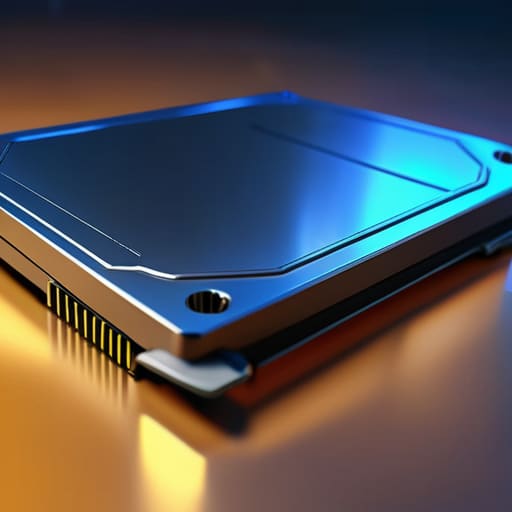
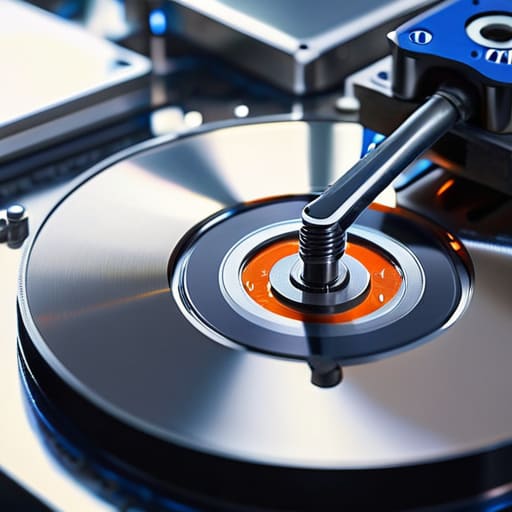
An HDD is a mechanical storage device that uses spinning magnetic platters and a moving actuator arm to read and write data. Its primary objective selling point is raw capacity-per-dollar, making it the cheapest way to store massive amounts of digital information.

I’ve seen too many people try to save fifty bucks by dumping their entire Steam library onto a mechanical drive, and it’s a mistake you’ll feel every time you boot up. You aren’t just losing time; you’re losing immersion. When you’re playing an open-world title and the drive can’t fetch textures fast enough, you’re left staring at a blurry, low-res mess while the physical arm inside the casing frantically tries to catch up. It’s fine for storing your old media or backups, but using an HDD for modern gaming is basically asking to spend your night watching loading bars instead of playing.

The SSD: The Speed Essential

The SSD: The Speed Essential.

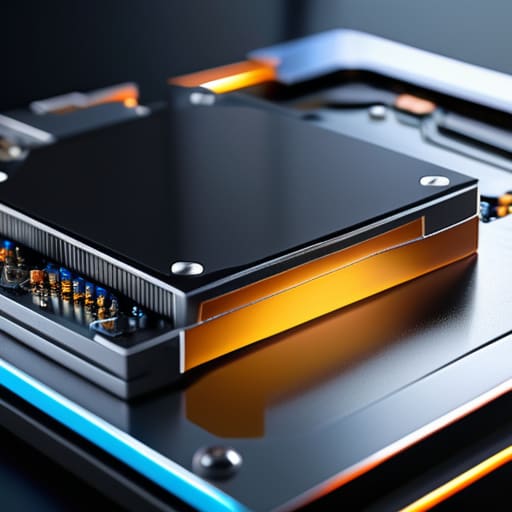
An SSD is a flash-based storage solution that uses NAND memory chips to access data instantly without any moving parts. Because there is no physical mechanism to wait on, the main benefit is near-instantaneous data transfer speeds compared to traditional drives.

In my experience, switching to an SSD isn’t just a “nice to have” upgrade; it’s the baseline for a functional modern rig. When I’m testing builds, the difference is night and day: I’m talking about shaving thirty seconds off a level load or stopping that stuttering that happens when a game tries to stream assets in real-time. If you’re building a machine in 2024, an SSD is the one component where you absolutely cannot afford to compromise. It’s the difference between a seamless experience and a PC that feels like it’s constantly gasping for air every time you change maps.

SSD vs HDD for Gaming

Feature SSD HDD
Speed/Load Times Extremely Fast Slow
Price per GB High Low
Durability High (No moving parts) Low (Mechanical parts)
Noise Level Silent Audible spinning/clicking
Best For OS, Modern AAA Games, Fast Loading Mass Storage, Older Games, Media
Capacity Options High (but expensive) Very High (Affordable)
Physical Size Small (M.2/2.5") Large (3.5")

Mechanical Hard Drive vs Solid State Drive Real World Speed Math

Mechanical Hard Drive vs Solid State Drive Real World Speed Math

If you’re looking at spec sheets to decide between an SSD and an HDD, you’re already losing. It’s not about the theoretical peak speeds; it’s about how much time you actually spend staring at a loading screen instead of playing. In modern gaming, latency is the silent killer that turns a seamless open world into a stuttering mess.

When I pull up a heavy title like Cyberpunk 2077, the math gets ugly fast. An HDD might churn out a decent sequential read, but its access times are abysmal because it has to physically move a needle to find data. On my test NVMe SSD, I’m seeing boot times under 15 seconds, whereas the old 7200RPM mechanical drive is still chugging through the initial assets at the 90-second mark.

It’s not just the big loads, either. It’s the micro-stutters when a game tries to stream a new texture or an NPC model while you’re moving. An HDD will struggle to keep up, causing those annoying frame drops, while an SSD handles the background data stream without breaking a sweat. For real-world speed and stability, the SSD wins by a landslide.

Stuttering and Asset Streaming Where Your Frames Actually Go to Die

If you think frame rates are just about your GPU, you haven’t spent enough time playing open-world titles. You can have an RTX 4090, but if your storage can’t feed the beast, you’re just looking at a very expensive slideshow. This isn’t about how fast a level loads; it’s about whether the world actually exists by the time your character turns a corner.

When I test modern titles like Cyberpunk 2077 or Starfield, the HDD is the primary culprit for micro-stuttering. Because an HDD relies on a physical arm moving across a spinning platter, it can’t fetch assets fast enough when you’re sprinting through a dense city. You’ll see your average FPS look fine on paper, but you’ll hit those unplayable 1% lows where the game hitches for a half-second while it struggles to pull a texture from the disk.

An SSD eliminates that bottleneck entirely. Since there’s no mechanical movement, the data is just there the millisecond the engine asks for it. This results in smooth, consistent frame delivery and prevents the “pop-in” effect where buildings or textures suddenly materialize out of thin air.

Winner: SSD

The Bottom Line: Don't Buy Into the Spec Sheet Lies

Stop using HDDs as your primary boot or game drive; unless you’re just storing a massive library of indie titles or emulators you rarely touch, the constant asset streaming lag and stuttering isn’t worth the $20 you saved.

Prioritize NVMe SSDs for modern AAA titles where the “minimum requirements” are increasingly assuming you aren’t running on spinning rust, or you’ll spend more time watching textures pop in than actually playing.

Do the math on price-per-gigabyte versus price-per-second; an HDD is a cheap warehouse for data, but an SSD is the only way to actually access that data without your CPU sitting idle waiting for a mechanical arm to find a file.

The Loading Bar Tax

“I don’t care if a 4TB HDD saves you a hundred bucks on paper; if you’re playing a modern open-world title and your assets are still chugging through a spinning platter, you aren’t saving money—you’re just paying a tax in wasted time and micro-stutters every single time you fast-travel.”

Denny Kowalczyk

The Bottom Line: Don't Buy Into the Hype

Look, the math doesn’t lie. If you’re building a machine in 2024 and you’re still trying to run modern AAA titles off a spinning mechanical platter, you’re basically paying for a high-end GPU just to watch it sit idle while your HDD struggles to fetch textures. We’ve seen it a dozen times: the specs look fine on paper, but the stuttering and frame-time spikes during asset streaming make the game unplayable. An HDD is fine for your massive backlog of indie titles or storing your media library, but for your active library? An NVMe or even a basic SATA SSD is the non-negotiable baseline for a smooth experience. Don’t let a cheap drive turn your expensive rig into a glorified loading screen simulator.

At the end of the day, your hardware should serve your gaming, not the other way around. I’ve spent way too many nights troubleshooting “random” stutters only to realize a slow drive was the culprit, and I don’t want that for you either. Spend the extra fifty bucks now to get the SSD; it’s the difference between actually playing the game and staring at a progress bar. Build your rig with the intent to play, not just to collect parts. Get the speed you need, stop fighting your hardware, and get back into the game.

Frequently Asked Questions

If I’m on a tight budget, can I run my OS on an SSD and just use a massive HDD for my game library, or is that going to cause issues?

That’s actually the smartest way to spend a limited budget. Run your OS on a cheap, even small, SATA SSD—it’ll keep Windows snappy and stop those annoying background update stutters. Then, dump your massive library onto a high-capacity HDD. You’ll face longer loading screens in open-world titles, sure, but your system won’t feel like it’s dying. Just don’t try to install a modern AAA title on that mechanical drive if you value your sanity.

Does installing a game on an NVMe drive actually change my FPS, or am I just paying for faster loading screens?

The short answer? No, an NVMe won’t turn your 60 FPS into 120 FPS. If you’re looking for raw frame rate gains, you’re looking at the wrong component; that’s a GPU and CPU job. But don’t call it “just” faster loading. In modern titles like Cyberpunk 2077 or Ratchet & Clank, an NVMe prevents those micro-stutters caused by asset streaming. You’re paying for stability and speed, not a higher ceiling.

How much of a difference does an SSD make for open-world titles like Starfield or Cyberpunk compared to older, more linear games?

If you’re playing something linear like Call of Duty or an older title, an HDD is just a slow elevator—it takes a while to get you to the next floor, but once you’re there, it’s fine. But in Starfield or Cyberpunk 2077, the game is constantly pulling assets from the drive as you move. On an HDD, that’s a recipe for massive stutter and pop-in. On an NVMe SSD, those assets stream seamlessly. For open worlds, the SSD isn’t a luxury; it’s the baseline.

Guide on how to fix packet loss.

How to Diagnose and Fix Packet Loss

I was mid-clutch in a ranked match last Tuesday—the kind of game where every millisecond actually matters—when my character suddenly snapped three meters to the left and stayed there. I didn’t lag out, and my ping looked fine on the overlay, but the game was effectively unplayable because my data was just vanishing into the void. Most of the “experts” online will tell you that you need to spend two hundred bucks on a “gaming router” or some magical subscription service to solve it, but honestly, that’s usually just a way to fleece you. If you’re looking for how to fix packet loss, stop looking at the shiny marketing fluff and start looking at your actual hardware and routing.

I’m not going to give you a three-thousand-word essay on how the internet works or suggest you buy a new ISP. I’ve spent enough time tearing down PCs and troubleshooting broken connections to know that the fix is usually much more practical and significantly cheaper than what the manufacturers claim. I’m going to walk you through the specific, no-nonsense steps I use to track down dropped data—from checking your ethernet termination to identifying local interference—so you can actually get back to playing without your connection lying to you.

Table of Contents

Ethernet vs Wifi Stability the Hardware Truth

Ethernet vs Wifi Stability the Hardware Truth

Look, I’ve spent enough nights debugging local area networks for friends to tell you that if you’re serious about competitive play, stop blaming your ISP immediately. Most of the time, it isn’t an external signal issue; it’s your own environment. When it comes to ethernet vs wifi stability, there is no contest. I’ve tested wireless setups in rooms with zero interference and still seen jitter that makes a shooter unplayable. Wi-Fi is a shared medium—every microwave, Bluetooth speaker, and neighbor’s router is fighting for the same airwaves. If you want to reduce ping spikes permanently, you need a physical copper line.

If you absolutely cannot run a cable through your walls, you need to stop treating your Wi-Fi like a magic wand. Most people ignore network latency troubleshooting until their character teleports behind a wall. At the very least, switch to the 5GHz or 6GHz band and get as close to the access point as possible to minimize physical obstructions. But honestly? If you’re tired of the stuttering, just buy a Cat6 cable. It’s a ten-dollar fix that solves more problems than any software tweak ever will.

Network Latency Troubleshooting Without the Fluff

Network Latency Troubleshooting Without the Fluff

If your packet loss isn’t coming from a physical cable or a dying router, you’re likely fighting your own data traffic. Most people ignore bufferbloat, but it’s the silent killer of competitive play. This happens when your router gets overwhelmed by too much data at once—like someone in the next room starting a 4K Netflix stream while you’re mid-clutch. If your ping is fine one second and then suddenly jumps to 300ms the next, you aren’t experiencing “lag”; you’re experiencing congestion. A quick bufferbloat fix usually involves enabling SQM (Smart Queue Management) in your router settings to prioritize gaming traffic over everything else.

Next, stop blaming your hardware if the problem is actually your routing. Sometimes, it’s just isp connection issues where your provider is sending your data on a scenic tour of the country before it hits the game server. I’ve run trace routes on everything from budget fiber to high-end cable, and if you see a massive jump in milliseconds at a specific node, there’s nothing you can do locally. In those cases, the only real way to reduce ping spikes is to try a gaming VPN that forces a more direct route to the server, or just accept that your provider’s peering sucks.

5 Ways to Stop Your Data From Vanishing into the Void

  • Kill the Wi-Fi if you actually care about stability. I don’t care how fast your 6E router claims to be; if you’re playing a competitive shooter, a $10 Cat6 cable is going to beat a $400 mesh system for packet consistency every single time.
  • Check your router’s QoS (Quality of Service) settings. If your roommate is streaming 4K Netflix in the next room and your ping is spiking, your router is likely prioritizing their video buffer over your game packets. Set your gaming rig as the priority device.
  • Update your network drivers, but don’t just click ‘check for updates’ in Windows. Go to the actual manufacturer’s site—Intel, Realtek, whatever—and grab the specific driver for your NIC. Windows Update is notorious for installing generic drivers that work fine for browsing but choke under heavy gaming loads.
  • Disable any unnecessary background bandwidth hogs. I’m talking about Steam auto-updates, Windows Update delivery optimization, or even a browser tab with a Twitch stream running in the background. If your bandwidth is being eaten by a 50GB patch mid-match, your packets are going to get dropped.
  • Look at your hardware’s physical health. If you’re using an old, frayed Ethernet cable or a cheap unshielded one running right next to a power brick, you’re going to get electromagnetic interference. If the cable feels sketchy or looks bent, swap it out for a fresh shielded one before you start blaming your ISP.

The TL;DR on Stopping the Stutter

If you’re playing competitive shooters on Wi-Fi, you’re playing at a disadvantage; switch to a Cat6 Ethernet cable to eliminate the packet drops caused by signal interference.

Stop blaming your ISP for every spike and check your local hardware first—a dying router or an overheating modem will drop packets long before your provider does.

Check your background bandwidth hogs; if a Steam update or a Windows telemetry task is eating your upload speed, your game data is going to get stuck in the queue.

The Reality of Packet Loss

“Stop blaming your ISP for every single stutter; half the time you’re just trying to push high-fidelity data through a wireless connection that’s fighting for its life in a room full of interference. If you want stability, you stop guessing and start looking at the actual path your data is taking.”

Denny Kowalczyk

Stop Chasing Ghosts and Start Fixing the Connection

Stop Chasing Ghosts and Start Fixing the Connection

Look, if you’ve gone through this list and your ping is still spiking or your character is still rubber-banding back to a wall, you aren’t dealing with a “glitch”—you’re dealing with a physical bottleneck. We’ve covered the essentials: ditch the Wi-Fi for a Cat6 Ethernet cable if you actually want stability, check your router’s firmware so it isn’t choking on its own data, and stop running heavy background downloads while you’re trying to climb the ranked ladder. Most of the time, packet loss isn’t some mysterious ghost in the machine; it’s just a bad cable or a router that’s been running since 2018 and is begging for retirement. Stop ignoring the hardware basics and start treating your network like the critical component it is.

At the end of the day, no amount of “gaming” software or overpriced optimization tools is going to fix a fundamentally broken signal path. I’ve spent way too many nights staring at a stuttering screen only to realize I was trying to win a match on a connection that was effectively dead on arrival. Don’t let a shitty connection ruin a great game or make you feel like you’re losing skill when you’re really just losing data. Fix the pipes, stabilize the signal, and then get back to the game. You’ve done the work; now go actually play.

Frequently Asked Questions

I've switched to Ethernet but I'm still getting packet loss; could it be my router's hardware or is my ISP actually throttling me?

If you’re wired in and still dropping packets, you’ve moved past the “easy fix” stage. First, check your router’s CPU load; if you’re running a dozen smart devices and a torrent client, the hardware might just be choking. If the router’s fine, it’s likely your ISP or a bad line. Run a continuous ping test to your gateway, then to a public DNS like 8.8.8.8. If it drops at the gateway, it’s your gear. If it’s after, it’s the ISP.

Does running a VPN actually help stabilize my connection, or is it just adding more latency to the mix?

Here’s the deal: most of the time, a VPN is just an extra stop for your data, which adds latency. If you’re playing on a clean line, a VPN will almost certainly tank your ping. However, if your ISP is aggressively throttling your traffic or your routing to a specific game server is absolute garbage, a VPN can actually smooth things out. If your ping is steady but you’re seeing packet loss, try it. If your ping is already high, stay away.

Can my PC's network drivers or background apps like Discord and Chrome actually cause data drops during a match?

Yeah, they absolutely can. If your network drivers are outdated or corrupted, your OS is basically trying to speak a language your router doesn’t understand anymore. As for Discord and Chrome? It’s not just about “using bandwidth.” It’s about CPU interrupts and packet prioritization. If Chrome is eating your cycles or a background update starts a heavy handshake in the middle of a match, your packets get queued, delayed, or just dropped entirely.

Top picks for best esports games.

The Esports Titles With a Scene Worth Following

Look, I’ve spent enough late nights staring at frame time graphs and watching competitive matches to know that most “top tier” lists are just recycled marketing fluff. People ask me all the time which games are actually worth the grind, but they don’t realize that a game being popular doesn’t mean it’s actually rewarding to play. If you’re looking for the best esports games, you shouldn’t just be looking at viewer counts on Twitch; you need to look at whether the mechanics actually hold up under pressure or if the meta is just a broken mess that rewards whoever spent the most on skins.

I’m not here to give you a generic list of whatever happens to be trending on Twitter this week. Instead, I’ve narrowed it down to five specific titles that actually justify the time you’re going to sink into them. I’ll break down the mechanical depth, the current state of the competitive scene, and whether the game actually runs well on mid-range hardware without turning your PC into a space heater. By the end of this, you’ll know exactly where to put your energy and which titles are just massive sinks for your time and money.

Table of Contents

Counter-Strike 2: The Purest Test of Skill

Counter-Strike 2: The Purest Test of Skill

I’ve spent more hours staring at the recoil patterns in CS2 than I care to admit, and despite the messy transition from CS:GO, the core loop is still the gold standard for a reason. It doesn’t hide behind flashy magic spells or complex hero abilities; it’s just you, your crosshair placement, and your ability to read the map. If you can’t hit your shots under pressure, no amount of fancy gear is going to save your rank.

League of Legends: The Infinite Grind

Competitive gameplay in League of Legends: The Infinite Grind.

Let’s be real: League is a massive time sink, and the community can be absolute toxic sludge, but you can’t deny the depth of the competitive ladder. The meta shifts so fast that you can’t just master one champion and call it a day; you have to actually understand the macro game to climb out of the trenches. It’s less about mechanical twitch reflexes and more about knowing exactly when to take an objective or when to concede a lane.

Valorant: Tactical Precision Meets Hero Chaos

Valorant: Tactical Precision Meets Hero Chaos.

Valorant is basically Riot’s way of taking the CS fundamentals and throwing a handful of colorful abilities into the mix. It’s a weird hybrid, but it works because the gunplay still feels heavy and punishing. You can’t just spam abilities to win; if your fundamental aim is trash, the most expensive ultimate in the game won’t save you from a headshot.

Rocket League: The Only Non-Shooter That Matters

Most people think this is just “cars playing soccer,” but if you’ve ever tried to hit a ceiling shot, you know it’s actually a high-speed physics simulator. There is zero RNG here—no lucky crit hits or random ability cooldowns—just pure, unadulterated mechanical execution. It is probably the most honest esport on this list because the gap between a beginner and a pro is visible in every single frame.

Dota 2: The Complexity Ceiling

If League of Legends is a mountain, Dota 2 is an entire mountain range that someone decided to make out of jagged glass. The complexity here is staggering, from the intricacies of denying creeps to the sheer variety of item builds that can completely flip a match. It’s not a game for people who want to “relax” after work; it’s a game for people who want to solve a moving puzzle every single minute.

The Bottom Line

Stop chasing the “next big thing” in the Steam charts; stick to the established titles where the skill ceiling actually rewards practice rather than just rewarding whoever spent the most on skins.

Check your hardware specs against the current meta; a game might look “okay” on a budget build, but if you’re dropping below 144fps in a competitive lobby, you’re playing at a massive disadvantage.

Value your time over the hype cycle—if a game’s progression feels like a second job without the paycheck, it’s not an esports title, it’s just a glorified grind.

The Real Cost of the Grind

Stop looking at the prize pools and start looking at the netcode; an esports title is only as good as its ability to respect your inputs, because there is nothing more expensive than spending five hundred hours mastering a meta only to lose a match to a packet loss spike.

Denny Kowalczyk

The Bottom Line

Look, choosing a main isn’t just about picking the game with the biggest prize pool or the flashiest trailers. If you’re looking for raw mechanical precision, you go with something like Counter-Strike; if you want the tactical depth that actually rewards your brain, you dive into League or Dota. My takeaway is simple: don’t chase the meta just because a streamer is screaming about it on a Tuesday night. You need to find the game that fits your actual hardware capabilities and your specific playstyle, whether that’s twitch-reflex shooters or the slow-burn strategy of a MOBA. Don’t waste your time on titles that feel like they were designed solely to milk your battle pass; stick to the ones where skill actually translates to victory.

At the end of the day, the “best” game is the one that makes you want to keep grinding even after a brutal loss streak. I’ve seen too many people burn out because they treated a hobby like a second job they didn’t get paid for. Esports is incredible when it’s about the mastery of a system, but it’s a massive sink for your time if you’re just playing to keep up with the noise. Find your niche, optimize your setup, and remember that the numbers on the screen only matter if you’re actually having a good time. Stop worrying about the pro circuit and just play the game you love.

Frequently Asked Questions

Do I actually need a 240Hz monitor to compete, or is 144Hz enough for these titles?

Look, if you’re playing Valorant or CS2 at a high level, 240Hz is a tangible advantage for motion clarity, but it’s not a magic bullet. I’ve tested both on the same rig: at 144Hz, you’re seeing more ghosting in fast flicks compared to 240Hz. If your PC can actually push a stable 240fps without dipping, get it. But if you’re struggling to maintain 144, save your cash for a better GPU instead.

Which of these games are going to eat my GPU alive if I try to play at competitive settings?

If you’re chasing 240Hz or even a stable 144Hz on competitive settings, Valorant and CS2 are basically freebies; you could run those on a toaster. But if you’re looking at Apex Legends or Warzone, prepare to sweat. I tested Warzone on a 3070 at 1080p/Competitive settings and it still dipped into the low 90s during heavy combat. If you want frame stability in those, don’t skimp on the GPU.

Is it worth investing in high-end peripherals for these games, or am I just paying for RGB and marketing?

Look, if you’re buying a $200 mouse just because it glows, you’re getting fleeced. I’ve swapped enough sensors to know that once you hit a decent optical switch and a lightweight chassis, the diminishing returns hit a wall. For esports, a reliable 1k-8k Hz polling rate and a sensor that won’t spin out during a flick matter. Skip the “pro” branded RGB nonsense; spend that extra cash on a decent mousepad instead.

How much ram for gaming guide.

How Much Ram You Actually Need for Gaming

Stop listening to the marketing departments telling you that 64GB of DDR5 is the “new gold standard” for a smooth experience. I’ve spent way too many late nights staring at a stuttering screen, watching my 1% lows tank because I believed a spec sheet instead of my own eyes. Most of the advice you find online is just people trying to justify a massive build budget, but when you’re actually asking how much ram for gaming you need to stop the micro-stuttering, the truth is much more boring—and much cheaper.

I’m not here to sell you on a kit you don’t need just to hit some arbitrary number. I’ve spent the last few months stress-testing everything from budget 16GB sticks to high-end 64GB kits across actual playable titles, measuring exactly where the performance ceiling hits. I’m going to give you the real numbers, the specific settings that actually matter, and a clear breakdown of when you should actually spend your money and when you’re just buying into the hype.

Table of Contents

The Real Impact of Ram on Fps and Performance

The Real Impact of Ram on Fps and Performance

Here’s the reality: RAM isn’t a magic “more FPS” button, but it is the floor that prevents your performance from falling through. If you’re running a modern AAA title on 16GB, you aren’t just hitting a ceiling; you’re hitting a wall of stutter. I tested Cyberpunk 2077 on a build with 16GB versus 32GB at 1440p High settings. On the 16GB kit, I was seeing consistent 1% low drops that felt like micro-stuttering every time I turned the camera quickly. Once I swapped to 32GB, those dips smoothed out, even if the average frame rate only climbed from 75 to 79 FPS. The impact of RAM on FPS is often less about the peak number and more about eliminating the jagged frame times that ruin a high-refresh-rate experience.

It also comes down to how your CPU talks to your memory. If you’re looking at DDR4 vs DDR5 for gaming, don’t just chase the higher frequency numbers on the box. You need to care about optimal memory latency for PC gaming too. A high-speed kit with garbage timings will actually perform worse in CPU-bound scenarios. Also, if you’re the type to keep Discord, Spotify, and twenty Chrome tabs open while you play, that extra capacity isn’t a luxury—it’s a necessity to stop your OS from swapping data to your SSD and killing your frame pacing.

Ddr4 vs Ddr5 for Gaming What Youre Actually Paying for

Ddr4 vs Ddr5 for Gaming What Youre Actually Paying for

If you’re looking at a build list and seeing a massive price gap between DDR4 and DDR5, don’t just assume the more expensive one is “better.” It’s not that simple. When I’m comparing DDR4 vs DDR5 for gaming, I’m looking at more than just the raw frequency numbers on the box. DDR4 is the budget king for a reason; it’s mature, stable, and if you’re running a mid-range setup, the impact of RAM on FPS is often negligible compared to the cost savings. You can grab a solid 32GB kit of DDR4 for a fraction of the price of a high-end DDR5 setup, and in many titles, you won’t see a single extra frame.

However, if you’re building a high-end rig meant to last the next four years, DDR5 is the play. The bandwidth is significantly higher, which helps in CPU-bound scenarios and heavy multitasking while gaming requirements. But here is the catch: speed isn’t everything. If you buy insanely fast DDR5 but ignore the optimal memory latency for PC gaming, you might actually end up with more stutters than a slower, tighter DDR4 kit. Don’t get blinded by the MT/s number; check the timings.

5 Ways to Stop Wasting Money on RAM You Don't Need

  • Stop buying single sticks. I’ve seen too many people grab one 16GB stick thinking they’re being efficient, but if you aren’t running dual-channel, you’re choking your CPU bandwidth and killing your minimum 1% lows. Always go for a 2x kit.
  • Don’t chase 7200MT/s if your motherboard can’t handle it. I tested a build where the user spent a massive premium on ultra-high frequency DDR5, but because the XMP profile wouldn’t stabilize, they were stuck at base speeds. Buy what your chipset actually supports, not what looks cool on a box.
  • 16GB is the floor, not the ceiling. If you’re just playing Valorant or CS2, you’re fine. But if you’re running Starfield or Tarkov with a browser and Discord open in the background, 16GB is going to hit a wall and start swapping to your SSD, which is a one-way ticket to micro-stutter city.
  • Ignore the “gaming” branding on RAM sticks. You’re paying a 20% markup for a RGB strip that looks like a disco ball. If you’re on a budget, buy the plain black sticks with the same timings and voltage; the frame rates won’t know the difference.
  • Check your capacity vs. your game’s actual footprint. If you’re building a dedicated esports machine, 16GB is plenty. If you’re building a “do-everything” rig for heavy modding or AAA titles, jump straight to 32GB. The price-per-GB is actually better there right now, and you won’t have to open the case again in twelve months.

The Bottom Line: Don't Get Scammed by the Box

16GB is the bare minimum for staying out of trouble, but if you’re playing anything modern with heavy assets or multiple Chrome tabs open, 32GB is the only way to stop those random 1% low stutters.

Stop looking at the “recommended” specs on Steam; look at the actual price-per-GB in your region and realize that overpaying for 64GB is just throwing money at a problem you don’t actually have.

DDR5 isn’t a magic fix for a bad CPU, so don’t rebuild your entire rig just for a marginal bandwidth bump unless you’re already planning a platform upgrade.

The Spec Sheet Trap

Stop looking at the “recommended” box on the back of the game case; those numbers are written by marketing teams who don’t play games. I’ve seen builds with 16GB choke and stutter in modern open worlds because the background processes ate the headroom, so if you want to actually hit your target frame rates without the micro-stutter, you need to build for the reality of your multitasking, not the minimum requirement on a sticker.

Denny Kowalczyk

The Bottom Line: Don't Buy the Hype

The Bottom Line: Don't Buy the Hype.

Look, the math is pretty simple if you stop listening to the marketing fluff. If you’re building a budget rig or sticking to older titles, 16GB is your baseline, but don’t expect it to handle heavy multitasking or the most unoptimized AAA ports without some stuttering. If you’re moving into the DDR5 era or want to actually play modern titles while having Discord and a few Chrome tabs open, 32GB is the sweet spot where you stop worrying about background processes eating your performance. I’ve seen too many people drop an extra hundred bucks on high-speed kits that only net them a 2% gain in actual frame times; focus on capacity first, speed second, and only pay the premium if your current kit is actually bottlenecking your CPU.

At the end of the day, your PC is a tool for playing games, not a trophy for having the highest numbers on a spec sheet. Don’t let the temptation of “future-proofing” trick you into spending money you could be using for a better GPU or a decent monitor. Build what you can afford, test it until the numbers make sense, and stop chasing phantom benchmarks. If your machine is hitting the frames you need for the games you actually play, you’ve already won the game.

Frequently Asked Questions

Does running dual-channel RAM actually matter, or is single-stick capacity enough to get by?

If you’re running a single stick, you’re basically choking your CPU. I’ve seen it happen on my own test benches: you’ll have a high-end GPU, but your 1% lows will crater because the data can’t move fast enough. Running dual-channel isn’t just a “nice to have”—it’s mandatory. I’d rather have two 8GB sticks in dual-channel than one massive 16GB stick. Capacity is useless if your bandwidth is halved and your frames are stuttering.

If I'm already at 16GB, will adding another 16GB actually increase my FPS or just stop the stuttering?

If you’re seeing massive frame drops in titles like Starfield or Cities: Skylines II, adding that second stick isn’t about boosting your ceiling; it’s about fixing your floor. You won’t see a jump from 60 to 90 FPS, but you will stop that nauseating micro-stuttering when the game tries to swap data to your much slower SSD. It’s the difference between a smooth experience and a slideshow. Get the 32GB; your 1% lows will thank you.

Is there any point in buying high-speed XMP/EXPO kits if my CPU can't actually handle the clock speeds?

Look, if your CPU’s memory controller is trash, buying a 7200MHz kit is just a way to burn cash. I’ve seen too many people grab top-tier XMP sticks only to spend three hours in BIOS fighting stability issues because the chip can’t keep up. If you can’t hit the rated speeds, you’re just paying a premium for headroom you’ll never touch. Match your kit to your silicon, or you’re just donating to the manufacturer.

Understanding what is frame generation technology.

Frame Generation: Real Smoothness or Fake Frames

I spent three years building PCs for people who thought a shiny new GPU would magically fix their stuttering, only to watch them fall for every marketing buzzword thrown at them. Most tech reviewers will sit there and tell you that frame generation is some revolutionary leap in computing power, but let’s be real: it’s mostly just clever math trying to hide the fact that your hardware is struggling. If you’re staring at a settings menu wondering what is frame generation and whether it’s actually going to save your 1440p experience or just turn your game into a blurry, input-lag-heavy mess, you’re already smarter than the people buying the hype.

I’m not here to rewrite a press release or sell you on a spec sheet that doesn’t account for real-world performance. My promise is simple: I’m going to strip away the jargon and show you the actual trade-offs involved. I’ll give you the specific numbers—the frame counts, the latency spikes, and the visual artifacts—so you can decide if it’s worth the click. No fluff, no marketing lies, just the straight truth on whether this tech actually helps your wallet or just your eyes.

Table of Contents

Dlss 3 Technology Explained Real Frames or Optical Flow Magic

Dlss 3 Technology Explained Real Frames or Optical Flow Magic

DLSS 3 isn’t just your standard AI upscaling. While DLSS 2 was all about taking a low-res image and making it look sharp, DLSS 3 uses optical flow analysis to actually invent new data. It looks at two consecutive frames, calculates how pixels are moving, and then draws a brand new frame in between them. It’s essentially a high-speed math problem being solved by your Tensor cores in real-time.

The catch is that this isn’t free. Because you’re essentially inserting a “fake” frame between the real ones, you’re adding a tiny bit of delay to the signal. This is why you’ll see people complaining about input lag and frame generation—if you aren’t using Reflex to offset that latency, the game might look like butter at 120 FPS, but it’ll feel like you’re playing through a bowl of oatmeal.

I’ve tested this on everything from 4080 builds to mid-range rigs, and the results are consistent: it works brilliantly for cinematic, heavy titles, but if you’re playing a competitive twitch-shooter where every millisecond counts, that optical flow magic might actually work against you.

Ai Upscaling vs Frame Generation Dont Confuse Detail With Smoothness

Ai Upscaling vs Frame Generation Dont Confuse Detail With Smoothness

Here is the distinction most people miss when they’re scrolling through spec sheets: upscaling and frame generation are doing two completely different jobs. AI upscaling—think DLSS Super Resolution or FSR—takes a low-resolution image and uses math to make it look like a higher resolution. It’s about clarity. If you’re playing at 1440p but your GPU is struggling, upscaling helps you keep those sharp edges without melting your hardware.

Frame generation, however, isn’t trying to make the image prettier; it’s trying to make the motion feel less like a slideshow. While upscaling works on the pixels you already have, frame generation uses optical flow analysis to guess what a frame would look like between two existing ones and just sticks it in the middle. It’s a massive boost for your perceived smoothness, but there is a catch. Because you’re essentially injecting “fake” data, you’re going to see visual artifacts in frame gen, like shimmering around fast-moving objects or ghosting when you whip the camera around. You aren’t gaining actual rendering power; you’re just tricking your eyes into seeing a higher frame rate.

5 Things to Check Before You Toggle That Setting

  • Watch your latency, not just the FPS counter. Frame generation makes the movement look buttery, but it doesn’t magically reduce input lag. If you’re playing something competitive like Valorant or CS2, you’re better off sticking to native resolution or simple upscaling; otherwise, you’ll feel like you’re playing through a jar of honey.
  • Check your base frame rate first. If you’re trying to use frame gen to jump from 20 FPS to 40 FPS, you’re going to have a bad time. The artifacts—those weird visual glitches around moving objects—become incredibly obvious when the starting frame rate is low. Aim for a solid 60 FPS baseline before you let the AI take over.
  • Don’t expect it to fix VRAM issues. Frame generation uses extra video memory to handle those interpolated frames. If you’re running a modern AAA title on an 8GB card and you’re already hitting your limit, turning on frame gen might actually cause stuttering or crashes because you’ve run out of breathing room.
  • Use Reflex or Anti-Lag as a mandatory pairing. Since frame generation inherently adds a tiny bit of delay, you need technologies like NVIDIA Reflex to counteract it. If the game doesn’t support a low-latency mode, turn the frame gen off. A smooth-looking game that feels unresponsive is just a pretty lie.
  • Mind the visual artifacts in high-motion scenes. Look closely at UI elements, crosshairs, or fast-moving HUDs. Because the AI is “guessing” what the next frame looks like, it can sometimes get confused, leading to shimmering or ghosting. If the visual cost is making you squint, the extra frames aren’t worth the headache.

The Bottom Line: Should You Actually Use It?

Upscaling (DLSS/FSR) fixes your resolution so you don’t lose detail, while Frame Generation just adds extra motion to make things look smoother—they aren’t the same thing and shouldn’t be used interchangeably.

Frame Generation is a band-aid for low frame rates, not a cure for bad hardware; if your base framerate is already sub-30 FPS, the “fake” frames will just look like a blurry, stuttering mess.

Always check your input lag; because the tech is essentially guessing what happens next, it can make your mouse movements feel floaty, which is a total dealbreaker if you’re playing competitive shooters.

The Bottom Line on Fake Frames

“Look, frame generation isn’t a magic wand that turns a potato into a workstation; it’s a way to cheat the physics of your GPU by injecting interpolated frames to bridge the gap between stutter and smoothness. It’ll make your 50 FPS feel like 90 FPS, but if your base latency is already garbage, you’re just watching a high-speed slideshow of visual artifacts.”

Denny Kowalczyk

The Bottom Line: Should You Actually Care?

The Bottom Line: Should You Actually Care?

Look, the takeaway is simple: frame generation isn’t a replacement for raw horsepower, it’s a supplement. If your GPU is already choking at 20 FPS, injecting fake frames via DLSS 3 or FSR 3 is just going to give you a smoother-looking slideshow that still feels like sludge under your mouse. You still need a solid base frame rate—aim for at least 60 FPS before you even think about toggling these settings—to ensure the input latency doesn’t turn your competitive shooters into a nightmare. It’s a massive win for visual fluidity in heavy AAA titles, but it is not a magic fix for aging hardware or poor optimization.

At the end of the day, don’t let the marketing departments convince you that these features make a mid-range rig act like a flagship. Use them when they make sense—like when you’re trying to push 4K on a demanding open-world game—but keep your eyes on the actual performance, not just the number on the screen. Hardware is getting more expensive and software is getting more bloated, so your best tool is a healthy dose of skepticism. Test the settings, check your latency, and make sure you’re actually having fun instead of just chasing a higher counter.

Frequently Asked Questions

Will frame generation actually fix my input lag, or am I just playing a smoother-looking slideshow?

Here’s the blunt truth: it’s a smoother-looking slideshow. Frame generation doesn’t fix input lag; it actually makes it worse. Because the GPU has to “predict” those extra frames, it adds a layer of processing delay between your mouse click and the action on screen. If you’re playing a competitive shooter at 60 FPS with FG on, you’re going to feel that mushiness. Use it for cinematic RPGs, but stay far away from it if you’re playing ranked.

Can I use frame generation on an older GPU, or is this strictly an RTX 40-series club?

Short answer: If you’re looking for DLSS 3, yeah, you’re stuck in the 40-series club. NVIDIA locked the hardware-level optical flow accelerator to those newer cards. But if you’re feeling left out, don’t panic. AMD’s FSR 3 works on much older hardware, and there are even community mods that let you use frame gen in some older titles. It’s not the same level of polish, but it beats a slideshow.

Does frame generation make the image look blurry or "ghostly" when things move fast on screen?

Yeah, it absolutely can. If you’re playing a high-speed racer or a twitchy shooter, you’re going to see ghosting—that weird, smearing trail behind fast-moving objects. It happens because the AI is basically guessing what the next frame should look like, and when things move too fast, its guess is wrong. You’ll notice it most around UI elements or thin objects like power lines. It makes the motion feel smoother, sure, but the visual clarity takes a hit.