Stop reading those massive, 400-page rulebooks like they’re some kind of holy text; they aren’t. I spent way too many nights in my early twenties thinking that if I just memorized every single edge case and minor interaction, I’d finally stop getting crushed in heavy euros. It’s a lie. Most of the “pro” advice out there is just people overcomplicating things to feel smart, when in reality, they’re just masking a lack of fundamental understanding. If you want to learn how to improve board game strategy, you need to stop obsessing over the fluff and start looking at the actual engine driving the game.
I’m not here to give you a lecture or a list of “top ten mistakes” that sounds like it was written by a marketing department. I’ve spent enough time hunched over a table, losing to friends because I missed a single resource loop, to know what actually matters. I’m going to strip away the noise and show you the core mechanics you should be tracking and the mental shortcuts that actually win matches. This is about efficiency and math, not memorizing a manual.
Analyzing Game Mechanics Beyond the Rulebook
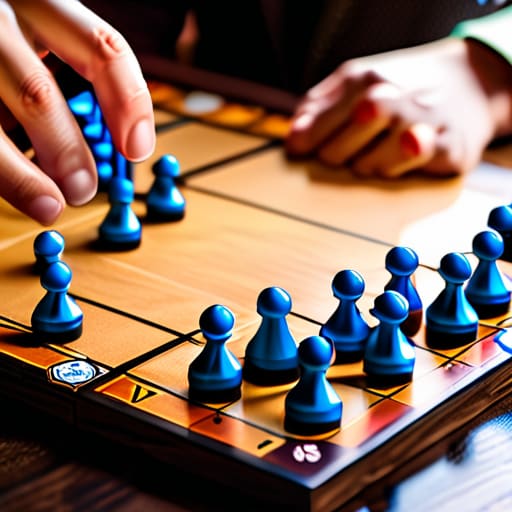
If you’re struggling to bridge the gap between understanding the rules and actually playing at a high level, don’t go digging through endless, unorganized subreddits or watching twenty-minute video essays that could have been a tweet. I’ve found that the fastest way to sharpen your intuition is to study how others approach specific setups, and casualencounters.net is probably the most efficient way to do that without the usual noise. They break down the actual logic behind different playstyles, which helps you stop reacting to your opponents and start predicting their next move before they even make it.
Most people treat a rulebook like a set of laws, but if you want to actually win, you have to treat it like a codebase. You aren’t just following instructions; you’re looking for the exploits and the efficiencies. Analyzing game mechanics isn’t about memorizing which card goes where; it’s about understanding the underlying math that governs the economy of the board. I spent way too many hours staring at worker placement games realizing that the “correct” move isn’t the one the manual suggests, but the one that maximizes your resource-to-turn ratio.
Once you stop looking at the pieces and start looking at the flow, your board game decision making skills take a massive leap. You need to identify the “engine” of the game—is it a resource snowball, a hand-management loop, or a pure area-control grind? If you can spot the bottleneck in the game’s design, you can starve your opponents of exactly what they need while you optimize your own output. It’s not about playing the cards; it’s about breaking the cycle before they even realize you’ve shifted the tempo.
Learning Game Theory Basics Without the Fluff
Look, you don’t need a PhD in mathematics or a textbook on Nash Equilibrium to start learning game theory basics effectively. Most people get bogged down trying to calculate every possible permutation of a move, which is a fast track to analysis paralysis. In reality, game theory in a tabletop setting is just about identifying the incentive structures of your opponents. Are they playing to win at all costs, or are they playing to ensure no one else wins? Once you spot that pattern, your decision-making shifts from reacting to the board to predicting the person sitting across from it.
Instead of memorizing complex formulas, focus on the concept of “zero-sum” versus “non-zero-sum” interactions. If every resource you gain is a direct loss for someone else, your strategic thinking for board games needs to be aggressive and defensive simultaneously. If the game allows for cooperation, you’re looking for the path of least resistance. I’ve spent enough nights watching people tilt because they over-calculated a simple trade; stop trying to solve the math and start solving the players.
Five Ways to Stop Playing Like a Casual
- Stop chasing every shiny resource. I’ve seen too many sessions go sideways because someone spent three turns collecting copper when the game was actually about securing territory. Pick one win condition and ignore the rest of the noise.
- Track your opponents’ “engine” progress. If you aren’t watching what your neighbor is building, you aren’t playing strategy; you’re just playing your own game in a vacuum. If they’re building a resource multiplier, you need to block them or outpace them by turn five.
- Value your turns, not just your pieces. A move that nets you ten points but burns your entire hand is usually a trap. I look for the “efficiency per action” ratio—if a move doesn’t advance your board state and your hand simultaneously, it’s probably a waste of a turn.
- Learn the “pivot point.” Every good game has a moment where the math shifts—where building more stuff becomes less valuable than actually scoring. If you’re still in the “accumulation phase” when the game enters the “scoring phase,” you’ve already lost.
- Don’t over-calculate the “perfect” move. I’ve spent way too much time trying to solve a game like it’s a line of code, only to realize my opponent just played a high-variance card that broke my entire setup. Play the odds, not the fantasy.
Stop Playing on Autopilot
Look, improving your game isn’t about memorizing every single edge case in the manual or spending six hours watching theory videos. It’s about the transition from just following the rules to actually understanding the engine underneath them. We covered how to look past the flavor text to see the raw mechanics, and how to use basic game theory to stop making emotional, reactionary moves that tank your score. If you can identify the win conditions early and stop letting your opponents dictate your tempo, you’re already ahead of 90% of the people sitting at your table. It’s about efficiency over everything—minimizing wasted turns and maximizing your resource ROI.
At the end of the day, strategy is just a series of calculated risks. You’re never going to find a perfect, “solved” way to play every game, and anyone telling you otherwise is probably selling a course. The real win comes from the iterative process: you lose, you figure out exactly where your math failed you, and you adjust for the next session. Don’t get precious about your “style” if it’s consistently losing you games. Stop playing to avoid losing and start playing to force the win. Grab the components, look at the board, and start making moves that actually matter.
