I spent three hours last night staring at a health bar that refused to move, not because the enemy was clever, but because the developers decided that “difficulty” was just a synonym for “bullet sponge.” It’s the same bullshit I see in every major AAA release lately: massive, cinematic set pieces that look incredible in a 4K trailer but fall apart the second you actually try to play them. Everyone wants to talk about the scale or the orchestral swell, but they completely ignore what makes a good boss fight actually function on a mechanical level. A boss shouldn’t be a chore that tests your patience; it should be a test of everything you’ve learned since the last checkpoint.
I’m not here to give you a lecture on game design theory or some vague, poetic essay about “the hero’s journey.” I’ve spent enough time rebuilding hardware and breaking games to know that if the hitboxes are janky or the telegraphing is non-existent, the fight is broken. In this guide, I’m stripping away the hype to look at the actual architecture of a win: patterns, telegraphs, and respecting the player’s time. No fluff, just the mechanics that actually matter.
Table of Contents
- Telegraphing Attack Patterns Without Holding Your Hand
- Gameplay Mechanics and Balance That Actually Respect Your Time
- The Checklist: How to Tell if a Boss is a Masterpiece or a Time-Waster
- The Bottom Line: Don't Waste My Time (Or Yours)
- The Difference Between Difficulty and Cheapness
- The Bottom Line
- Frequently Asked Questions
Telegraphing Attack Patterns Without Holding Your Hand
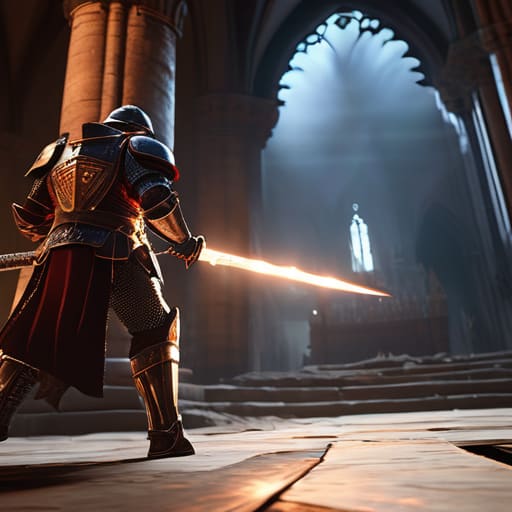
There is a massive difference between a boss that is hard and a boss that is just unfair. I’ve lost more hours to “difficulty” that was actually just bad coding than I care to admit. A well-designed encounter relies on telegraphing attack patterns through visual or auditory cues—a specific glint on a blade, a sudden shift in stance, or a roar that tells you to dodge right now. If I die, I want it to be because I missed the cue, not because the game decided to hit me with a frame-one unblockable attack that had zero warning.
When a fight is tuned correctly, it respects your player agency in combat. You should feel like you’re reading the boss like a book, learning the rhythm of the fight through observation. If the game has to slap a giant red arrow on the screen or slow down time just to make sure you don’t get crushed, it’s not challenging you; it’s patronizing you. The best encounters let you find the rhythm yourself, turning a chaotic mess of health bars into a dance where your reaction time actually matters.
Gameplay Mechanics and Balance That Actually Respect Your Time
The real killer isn’t a boss with a massive health bar; it’s a boss that forces you into a repetitive loop of “get hit, wait for animation, repeat.” When I’m testing a new title, I’m looking for player agency in combat. I want to feel like my specific build or my timing actually mattered, not like I’m just clicking a button because a timer told me to. If a fight feels like a chore, it’s usually because the gameplay mechanics and balance are leaning on artificial difficulty—like massive damage spikes or unreactable AOE attacks—rather than testing what I’ve actually learned.
I also have zero patience for poorly handled boss phase transitions. There is nothing that kills momentum faster than a fight that resets to zero every time the boss hits 50% health, forcing you to dodge the exact same opening move for another ten minutes. A good encounter should evolve. It should shift the arena or introduce a new mechanic that builds on what you just mastered, rather than just slapping a new skin on the same old patterns. If I’m spending twenty minutes on one fight, I want it to feel like a climax, not a grind.
The Checklist: How to Tell if a Boss is a Masterpiece or a Time-Waster
- Stop the health bar bloat. If I’m spending ten minutes dodging the same three predictable swings just to chip away at a massive HP pool, it isn’t a challenge; it’s a chore. A good boss should feel like a dance, not a war of attrition where the only way to win is to outlast a spreadsheet.
- Environmental interaction is non-negotiable. If the arena is just a flat, empty gray box, you’re missing half the potential. I want the floor to break, the lighting to shift when the boss enters phase two, or a specific pillar I can hide behind to avoid a one-shot mechanic.
- The “Phase Shift” needs to actually change the rhythm. Don’t just give the boss a new color palette and 50% more health. I want the move set to evolve—maybe the boss gets faster, or the arena shrinks, or the music shifts from a slow orchestral build to a frantic breakcore beat that matches the new tempo.
- Visual clarity over particle vomit. I’ve seen so many “epic” fights where the screen is so covered in sparks, smoke, and magical glow that I literally can’t see my own character’s feet. If I can’t see the tell for a heavy overhead smash because of a lens flare, that’s bad design, not “hard” gameplay.
- Fair punishment for mistakes. There is a massive difference between a boss that kills you because you messed up a dodge window and a boss that kills you because of a random, unblockable animation that happened while you were mid-combo. If I die, I need to know exactly which button I pressed wrong.
The Bottom Line: Don't Waste My Time (Or Yours)
If a boss fight feels unfair, it’s usually because the developer prioritized a “difficulty spike” over actual mechanical clarity; if you can’t see the tell before the hit lands, it’s bad design, not a challenge.
Respect the player’s time by making sure death is a learning moment rather than a repetitive chore; if I have to run through the same three empty corridors just to try a fight again, the game has already lost me.
A great encounter is defined by the rhythm between the boss’s patterns and your reaction, not by how many massive health bars or “bullet sponge” mechanics are thrown at your face to pad out the runtime.
The Difference Between Difficulty and Cheapness
A boss fight shouldn’t be a math problem where the only solution is “get hit more” or “spam this one move”; it’s about that split second where you actually read the animation, react, and realize you didn’t win because you got lucky, but because you actually learned the pattern.
Denny Kowalczyk
The Bottom Line
At the end of the day, a boss fight isn’t just a high-stakes obstacle meant to gatekeep progress; it’s a conversation between the developer and the player. If the fight relies on cheap, unreactable patterns or forces you into a repetitive loop that doesn’t actually teach you anything new, it’s a failure of design, not a test of skill. You need clear telegraphs that respect your reflexes and mechanics that feel fair even when you’re losing. A great encounter should feel like a calculated struggle, where every death provides a specific piece of data you can use to adjust your strategy for the next attempt.
We don’t play these games to be frustrated by broken math or poorly tuned health bars; we play to feel that rush of finally cracking the code. When a boss fight is built right, that moment of victory feels earned because you actually overcame the logic of the encounter rather than just out-grinding a stat wall. Stop settling for encounters that feel like a waste of your evening. Look for the ones that respect your time, reward your attention, and leave you wanting to jump right back into the fray the second the “Retry” screen fades.
Frequently Asked Questions
How do you tell the difference between a boss that's actually challenging and one that's just poorly optimized or broken?
It’s the difference between learning a rhythm and fighting a glitch. A real challenge is a puzzle you can solve with better timing or better positioning. A broken boss is just a mess of frame-data inconsistencies, hitboxes that extend three feet past the actual model, or “cheap” mechanics like unblockable attacks that trigger without a single visual cue. If you’re dying because you missed the window, that’s skill. If you’re dying because the game lied to you, that’s just bad code.
At what point does a boss fight stop being "hard but fair" and start becoming a repetitive chore that wastes my time?
It stops being fair the second the difficulty comes from a math problem rather than a skill check. If I’m dying because I missed a frame-perfect dodge, that’s on me. But if I’m dying because a boss has a massive, unreactable health pool or a phase that forces me to run in circles for three minutes just to trigger the next animation, that’s bad design. If the “challenge” is just mindless attrition, it’s a chore.
Can a boss fight be "good" if the mechanics are simple, or do you need complex, layered systems to keep it from feeling shallow?
Complexity is often just a mask for bad design. I’ve played bosses with twenty different phases that felt like a chore, and I’ve played bosses with two moves that felt legendary. A fight doesn’t need a spreadsheet of mechanics to work; it just needs those mechanics to be meaningful. If the core loop—the dodge, the parry, the timing—is tight, simplicity is a strength. Don’t confuse “layered” with “tedious.”
