I spent three years watching people pour hundreds of dollars into “pro-tier” peripherals and entry fees, all because they thought they could skip the line to the big leagues. They see a tournament bracket and think they’re one lucky win away from a sponsorship, but they don’t actually understand the grind. If you’re staring at a tournament page wondering what is a regional qualifier and whether it’s a legitimate stepping stone or just a way for organizers to farm registration fees, you’re already ahead of the idiots. Most people treat these events like a lottery, but in reality, they are the brutal filter that separates the players who actually have the mental stack from the ones who just have a high rank and a flashy skin.
I’m not here to give you a marketing brochure or tell you that “anyone can be a pro with enough practice.” I’ve seen enough hardware fail under pressure and enough players choke in the first round to know better. I’m going to break down exactly how these brackets work, the actual cost-to-skill ratio you should expect, and how to tell if a specific circuit is worth your time or just a massive waste of a weekend. No fluff, no hype—just the facts.
Table of Contents
- Decoding the Competitive Gaming Qualification Process
- The Esports Tournament Structure Separating Pros From Pretenders
- How to Not Waste Your Weekend at a Regional Qualifier
- The Bottom Line: Is a Qualifier Worth Your Grind?
- The Reality Check
- The Bottom Line: Is the Grind Worth It?
- Frequently Asked Questions
Decoding the Competitive Gaming Qualification Process

Most people think the road to a massive trophy and a six-figure payout is just a straight line, but the esports tournament structure is actually a massive, brutal funnel. You don’t just sign up for a Major and start playing for millions. You have to navigate a specific competitive gaming qualification process that starts in your own backyard—or more likely, in a Discord server or a low-stakes online lobby. Think of it as a series of filters designed to strip away anyone who can’t handle the pressure when the stakes actually start to matter.
It usually begins with these regional brackets where you’re fighting for a handful of slots. You aren’t just playing for pride; you’re securing tournament spots in higher-tier events that actually have the prize pools worth sweating over. If you win your local bracket, you move into the pro circuit qualifying rounds, where the skill ceiling jumps instantly. You go from playing against guys who are “pretty good” to facing people who have turned twitch reflexes into a full-time job. If you can’t maintain your composure during that transition, you’re out before the real money even enters the conversation.
The Esports Tournament Structure Separating Pros From Pretenders
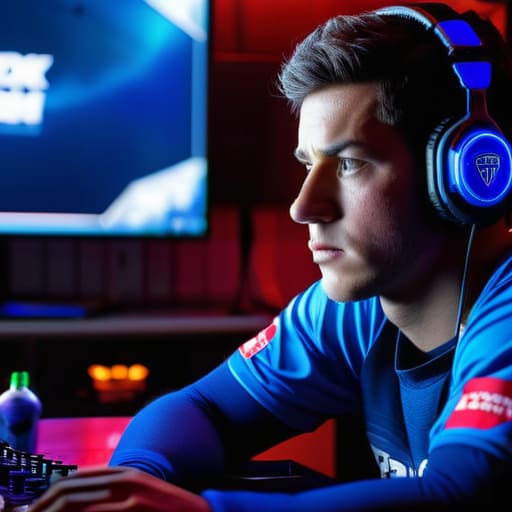
Most people see a massive trophy ceremony on Twitch and think that’s the whole game. It’s not. The actual esports tournament structure is basically a massive, high-stakes funnel designed to kill off the noise. You start in these local or online pools—the regional qualifiers—where the goal isn’t glory, it’s survival. You aren’t playing for a million-dollar prize pool yet; you’re playing just to avoid being the person who gets sent home after one bad map.
Once you clear those initial hurdles, you hit the pro circuit qualifying rounds. This is where the “pretenders” usually fall apart because the technical demand spikes. You aren’t just playing against your local Discord buddies anymore; you’re facing teams that have been grinding the same meta for months. The tournament bracket progression becomes much tighter here, too. One bad series in a double-elimination bracket and your entire season is effectively over. It’s a brutal way to filter talent, but it’s the only way to ensure that when the main stage finally lights up, the players actually deserve to be there.
How to Not Waste Your Weekend at a Regional Qualifier
- Check the prize pool vs. the entry fee. If you’re dropping fifty bucks on registration and the winner only gets a handful of gift cards, it’s a hobbyist meetup, not a stepping stone to the big leagues.
- Verify the rulebook before you even pack your mouse. Regional organizers are notorious for “local rules” that contradict the main circuit’s standards, and nothing kills a run faster than a technicality you didn’t see coming.
- Don’t rely on the venue’s Wi-Fi or power strips. I’ve seen entire brackets stall because a local organizer thought a consumer-grade router could handle sixty people playing high-tick-rate shooters. Bring your own extension lead and a wired connection if you can.
- Treat the “casual” matches with actual respect. The biggest mistake I see is players coasting through the early rounds of a regional and then getting absolutely dismantled by a grinder who treated every match like a Grand Final.
- Look at the actual talent density, not just the name of the event. A regional qualifier for a Tier 1 game is worth your time; a “regional” for a game with zero active pro circuit is just a glorified LAN party with more expensive headsets.
The Bottom Line: Is a Qualifier Worth Your Grind?
Don’t mistake a regional qualifier for a pro circuit; it’s a high-stakes filter designed to separate the people who play for fun from the people who actually have the discipline to compete.
Use qualifiers as a litmus test for your setup and skill—if you can’t maintain consistent performance under the pressure of a bracket, you aren’t ready for the main stage.
Treat every regional event as a data point; whether you win or get wiped, you’re gaining the specific kind of competitive experience that a ranked ladder simply can’t simulate.
The Reality Check
A regional qualifier isn’t some grand stage with lights and a trophy; it’s the brutal, unpolished filter where you find out if you actually have the mechanical skill to compete or if you’re just the biggest fish in a very small, very local pond.
Denny Kowalczyk
The Bottom Line: Is the Grind Worth It?

Look, at the end of the day, a regional qualifier isn’t some magical gateway to a million-dollar contract; it’s a high-stakes filter. We’ve broken down how these tournaments act as the gatekeepers, separating the people who just play for fun from the ones who actually have the mechanical skill to survive a professional bracket. You need to understand the structure—from the local LANs to the massive online open qualifiers—so you don’t waste your time chasing tournaments that have zero path to the main stage. If the prize pool is non-existent and the organizers look like they’re running the whole thing out of a basement, don’t burn your practice hours on it. Focus on the qualifiers that actually have teeth and a clear progression path to the big leagues.
If you’re reading this because you think you’ve got the aim or the APM to make it, my advice is simple: stop worrying about the “what” and start focusing on the “how.” The regional circuit is where you find out if your setup holds up under pressure and if your mental game is as solid as your K/D ratio. It’s going to be frustrating, you’re probably going to get hard-stuck in a bracket, and you’ll definitely face some massive skill gaps. But that’s exactly how it’s supposed to work. Every pro you see on a main stage once had to prove they weren’t just another casual in a regional bracket. Go get your numbers up.
Frequently Asked Questions
Do I actually need a pro team to enter, or can I just sign up as a solo player?
Short answer: it depends on the tournament, but don’t assume you need a roster. Most regional qualifiers are actually designed for the grinders—solo players or small stacks looking to prove they belong. You’ll see “Open” brackets where you just register your ID and go. However, if it’s a “Pro-Am” or a closed qualifier, you’ll need a registered team. Check the rulebook first; nothing kills a weekend faster than getting DQ’d for a registration error.
If I win a regional, am I guaranteed a spot in the main event, or is there another layer of qualifiers?
Short answer: No, you aren’t guaranteed anything. Winning a regional is a massive W, but it usually just earns you a seat at the next table. Most tier-one circuits use regionals as a filter to feed into a “Global Qualifier” or a “Challenger Stage.” You’ve basically just unlocked the right to play for the actual trophy. Don’t get complacent; the skill ceiling jumps exponentially once you move past the local bracket.
How much do these things actually cost to enter—is it a massive buy-in or just a way to scout talent?
Most regional qualifiers are actually pretty cheap to enter—we’re talking a small entry fee or even just a free registration if it’s a community-run bracket. They aren’t looking to drain your bank account; they’re looking for talent. Think of it as a scouting ground. If you’re playing in a high-stakes tier-two circuit, there might be a buy-in, but for most, it’s just a low-cost way to see if you actually have the mechanical skill to go pro.
