I remember sitting in my dorm room two years ago, surrounded by half-disassembled rigs and a mountain of debt, watching a pro player get kicked from a roster because his team’s “investment” didn’t see a return in three months. It felt wrong, like buying a GPU at MSRP only to find out the drivers are broken. People love to throw around terms like “stability” and “long-term growth” to justify these massive buy-ins, but if you’re asking what is a franchised league, you’re probably sensing that something is actually a bit broken. It’s not just about professionalizing the scene; it’s about turning a volatile sport into a closed-circuit club where the entry fee is high enough to keep the “little guys” out of the room entirely.
I’m not here to give you a corporate press release or a lecture on economic models that only make sense to billionaires. I’m going to break down exactly how these structures work, why they exist, and—more importantly—who actually wins when the promotion and relegation systems get tossed in the trash. No fluff, no hype, just the facts on whether this model is building a sustainable future or just buying a seat at a broken table.
Table of Contents
- The Esports Business Model Explained Stability vs Stagnation
- Closed League vs Open Circuit Who Actually Wins
- 5 Things to Check Before You Buy Into the Hype
- The Bottom Line: Is Franchising Actually Worth It?
- The Real Cost of the Buy-In
- The Bottom Line: Is the Seat Worth the Price?
- Frequently Asked Questions
The Esports Business Model Explained Stability vs Stagnation

The esports business model explained is basically a massive gamble on predictability. In a traditional open circuit, a team can go from a basement LAN to a world championship just by winning. It’s chaotic, but it’s organic. Franchising flips that on its head. Instead of fighting through qualifiers, you’re buying a permanent seat at the table. This provides a safety net for sponsors who are terrified of investing in a team that might disappear after one bad split, but it also creates a massive barrier to entry. When you look at the franchise slot valuation for leagues like the LCS or Overwatch, you’re seeing millions of dollars tied up in the mere right to compete, not necessarily in the skill of the players.
The trade-off is a constant tug-of-war between stability and stagnation. On one hand, you have revenue sharing in esports, which theoretically distributes league earnings back to the orgs to keep them afloat. On the other, you lose the “Cinderella story” that makes esports actually fun to watch. If the same ten teams are locked into the top tier regardless of their performance, the competitive drive starts to feel manufactured. You aren’t watching a meritocracy anymore; you’re watching a closed loop of protected assets.
Closed League vs Open Circuit Who Actually Wins
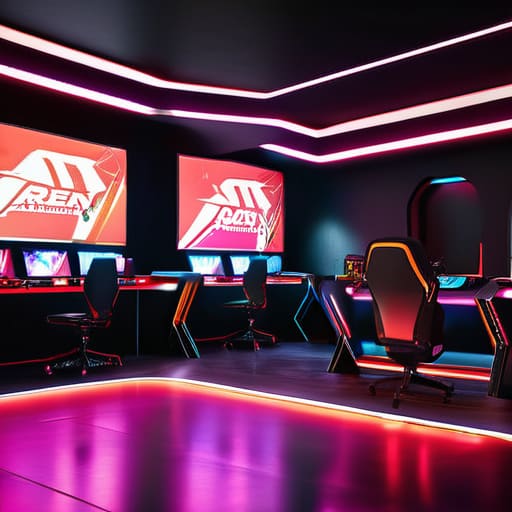
If you look at the closed league vs open circuit debate, it usually boils down to whether you value a safety net or a ladder. In an open circuit—think CS:GO or older fighting game scenes—anyone with a decent roster and a dream can theoretically climb from a basement tournament to a Major. It’s pure meritocracy, but it’s also chaos. Sponsors get twitchy because a team can be world-class one month and bankrupt the next because they missed a single qualifying event.
Franchising flips that script by prioritizing the investors. When you move into professional sports franchising models, you aren’t just playing for trophies; you’re playing for asset appreciation. The big players love it because revenue sharing in esports provides a predictable floor for their income. But that stability comes with a massive barrier to entry. When a single franchise slot valuation hits millions of dollars, the “little guy” isn’t just struggling—they’re mathematically excluded from the conversation. You end up with a polished, predictable product, but you might lose the raw, unpredictable energy that made the scene worth watching in the first place.
5 Things to Check Before You Buy Into the Hype
- Look past the “stability” marketing. A franchised league is great for sponsors because the teams aren’t going anywhere, but it’s terrible for the grassroots scene. If you’re a pro player, ask yourself if you’re entering a career or just a gated community.
- Watch the entry fee, not the trophy. When a league goes franchised, the “buy-in” cost is often astronomical. If the teams are spending all their capital just to exist in the league, they aren’t spending it on better talent or better production.
- Check the relegation clause—or lack thereof. In an open circuit, if you suck, you drop down. In a franchised league, you can be bottom of the table for three years and still keep your spot. That’s not competition; that’s a subscription service.
- Follow the revenue sharing, not the prize pools. In traditional esports, the big money was in the tournament winnings. In franchised models, the real money is in how the league splits media rights and sponsorships. If the math doesn’t add up for the teams, the league is a house of cards.
- Don’t mistake a closed loop for a growing ecosystem. A franchised league is like a high-end PC build with zero upgrade path: it’s polished and it works, but you can’t plug anything new into it without the whole system breaking.
The Bottom Line: Is Franchising Actually Worth It?
Franchising trades the “Cinderella story” of an underdog team rising from the bottom for a predictable business model where your investment won’t vanish because of one bad season.
Stability for owners often comes at the cost of the ecosystem; when there’s no way to earn your way in, you lose the high-stakes tension that makes competitive play actually watchable.
At the end of the day, a franchised league is a bet on long-term commercial growth over short-term competitive chaos—you’re paying for a seat at a stable table, but you’re losing the right to kick anyone else off it.
The Real Cost of the Buy-In
“Franchising is basically just turning esports into a gated community. You’re trading the chaotic, high-stakes energy of a promotion/relegation system for a predictable spreadsheet where the big players are safe, the investors are comfy, and the actual soul of the competition is often the first thing you sacrifice to keep the lights on.”
Denny Kowalczyk
The Bottom Line: Is the Seat Worth the Price?

At the end of the day, franchising is a massive gamble on stability. You’re trading the chaotic, merit-based high of an open circuit for a predictable business environment where a single bad season won’t bankrupt a team. We’ve seen how this creates massive investment security for orgs, but it also kills the “Cinderella story” that made us fall in love with esports in the first place. If you’re looking at the numbers, franchising offers a higher floor for professional organizations, but it creates a significantly lower ceiling for the grassroots talent trying to break through the barrier. It’s a trade-off between guaranteed survival and pure, unadulterated competition.
We shouldn’t just accept these structures because they look better on a spreadsheet or satisfy a venture capitalist’s hunger for “predictable returns.” Esports needs to stay more than just a collection of expensive, closed-loop franchises; it needs to remain a space where a kid with a decent rig and enough skill can actually change the world. Whether we’re talking about a $20 million league slot or a $500 GPU, the value is always found in the performance, not the marketing. Let’s make sure we keep building ecosystems that reward actual skill rather than just the size of your bank account.
Frequently Asked Questions
Does franchising mean smaller teams or rising stars can never actually break into the big leagues?
The short answer? Yeah, it’s a massive gatekeeping problem. In an open circuit, you win, you climb, you’re in. In a franchised league, you don’t matter unless you have a seven-figure buy-in or a billionaire backing you. It turns the “dream” into a closed loop where the same ten orgs occupy the top slots while rising stars get stuck grinding in Tier 2 with zero path to the main stage. It’s stability for owners, but a ceiling for talent.
If a team buys a slot for millions, does that money actually go back into the game or just into the pockets of the developers?
Short answer: It mostly goes into the developer’s pockets. When a team drops $20 million for a slot in a league like the LCS or Overwatch, that money isn’t being used to patch bugs or add new maps. It’s a buyout for entry. While some revenue-sharing models exist to kick some cash back to the orgs, the lion’s share of that initial massive investment stays with the publisher to fund their ecosystem—and their bottom line.
Can a franchised league actually survive if the game itself loses its player base?
Short answer: No. You can’t sell a front-row seat to a stadium that’s empty. Franchising is basically just buying a massive, permanent stake in a specific ecosystem. If the player base drops, the viewership dies, the sponsors bail, and those multi-million dollar slots become nothing but expensive digital paperweights. A league can have all the stability in the world, but if the game itself stops being played, the whole house of cards collapses.
