I spent three hours last Tuesday trying to stabilize a voltage regulator on a mid-90s motherboard, only to realize the “collector’s item” I’d bought was basically a ticking time bomb of leaking capacitors. Most people treat the history of vintage computing hardware like it’s some sacred, untouchable museum exhibit, but if you’ve actually opened one of these beige boxes, you know the truth: half of it is just planned obsolescence wrapped in nostalgia. I’m sick of seeing “retro enthusiasts” pay premium prices for machines that run like they’re stuck in molasses, all because a YouTuber told them a specific chipset is “legendary.”
I’m not here to sell you on the romance of the silicon era or feed you some sanitized timeline from a textbook. I’m going to break down the actual evolution of the gear—the stuff that actually matters when you’re trying to get a build to boot without a blue screen. I’ll tell you which architectures actually paved the way for your current rig and which ones were just expensive mistakes that aren’t worth your workbench space. No fluff, no hype, just the technical reality of how we got here.
From Vacuum Tube Computers to the First Real Logic
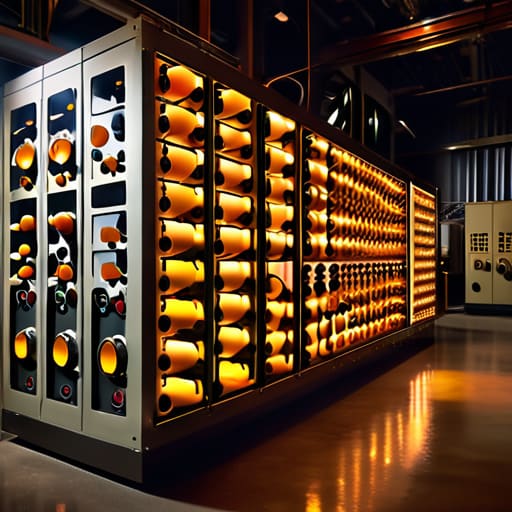
Before we get to the stuff you can actually fit on a desk, we have to talk about the absolute monsters that started it all. The history of vacuum tube computers isn’t about sleek chassis or RGB lighting; it’s about room-sized cabinets that generated enough heat to cook an egg and failed if someone breathed too hard near them. These weren’t “personal” anything. They were massive, fragile logic gates that occupied entire floors, doing math that would make a modern calculator sweat, but with the reliability of a wet paper towel.
The real shift happened when we stopped relying on glass tubes that burned out every hour and started leaning into semiconductor technology milestones. This wasn’t just a minor upgrade; it was the death of the massive mainframe as the only way to process data. As we moved toward the early personal computer architecture that defined the next few decades, the components shrank from the size of a lightbulb to something you could actually hold. I’ve seen the schematics for these early boards, and the jump from vacuum tubes to solid-state logic is the single most violent leap in hardware history.
The 8 Bit Computing Revolution That Changed Everything
If the vacuum tube era was the awkward, room-sized infancy of computing, the 8-bit computing revolution was the moment the tech actually moved into our homes. We aren’t talking about massive, climate-controlled mainframes anymore; we’re talking about the shift toward silicon that a single person could actually own. This wasn’t just about smaller boxes, though. It was the first real test of early personal computer architecture, where engineers had to figure out how to squeeze meaningful logic out of incredibly limited memory and processing power.
When I’m restoring an old Commodore 64 or a ZX Spectrum, I’m not just looking at the plastic shell; I’m looking at how these machines forced the evolution of microprocessors to move at breakneck speed. Every byte of RAM was a battlefield. You didn’t have the luxury of “background processes” or bloated OS updates; if your code wasn’t efficient, the machine simply wouldn’t run. This era taught us that hardware constraints don’t just limit what you can do—they force you to be smarter about how you use every single clock cycle.
Don't Get Scammed: 5 Things to Know Before You Buy Into the Retro Hype
- Ignore the “Mint Condition” label on eBay; if the capacitors haven’t been recapped, you aren’t buying a console, you’re buying a ticking time bomb that’ll leak acid all over your motherboard.
- Stop comparing 8-bit clock speeds to modern GHz; it’s a total lie that means nothing once you realize how much overhead modern OSs waste compared to the raw, direct-to-hardware efficiency of a Commodore 64.
- Always check for “yellowing” on the plastic, but remember that it’s usually just bromine in the ABS plastic reacting to UV—you can fix it with Retrobrighting, but don’t expect a miracle if the casing is structurally compromised.
- Don’t buy “vintage” just because a YouTuber said it’s aesthetic; if you can’t find a way to get the signal into a modern display without a $100 upscaler, you’re just owning an expensive, blurry paperweight.
- Prioritize machines with documented expansion ports; a machine that’s a closed loop is a dead end, but something like an Amiga gives you actual room to tinker and actually learn how the logic works.
The Bottom Line: Why We Keep Digging
Looking back at the jump from vacuum tubes to the 8-bit era, it’s easy to get lost in the nostalgia, but the technical reality is what actually matters. We went from machines that filled entire rooms just to perform basic arithmetic to hardware that could actually render a sprite or handle a game loop on your desk. It wasn’t just about the shrinking size; it was about the efficiency of logic and the shift from specialized military tools to machines built for people to actually touch and break. We’ve moved from massive, fragile components to the dense, hyper-optimized silicon we’re trying to benchmark today, and every single one of those old milestones paved the way for the frame rates we demand now.
At the end of the day, I don’t care about the museum value or the “vintage” label as much as I care about the engineering. These old machines prove that you don’t need a thousand-dollar GPU to create something that changes how we interact with the world. Whether you’re restoring a crusty Game Boy or building a high-end rig for 4K gaming, you’re participating in a lineage of constant optimization. Don’t just look at the spec sheets of the past; look at the problem-solving that happened when resources were scarce. That’s the real history, and that’s what actually drives the tech forward.
If you’re trying to track down specific era-appropriate components without getting fleeced by scalpers on eBay, you have to be smart about where you look. I’ve spent way too many late nights scouring forums for a specific capacitor or a working power supply just to keep a build from bricking, so I’ve learned that having a reliable source is everything. If you’re looking to round out a collection or just need something specific to get a project off the ground, checking out Hobbyladies online is actually a decent way to find what you need without the usual headache. It’s better to spend your budget on hardware that actually works than on a “mint condition” piece of junk that’s just waiting to fail the moment you plug it in.
