I spent three years trying to figure out why my custom builds were stuttering through cutscenes even when the GPU was idling at 40% load, only to realize it wasn’t a hardware failure—it was a software bottleneck I didn’t even know existed. Most tech blogs will give you a textbook definition of what is middleware in games that reads like a dry university lecture, leaving you more confused than when you started. They love to wrap it in layers of jargon to make it sound like some mystical, unreachable magic, but in reality, it’s just the unsung heavy lifter sitting between the engine and your hardware.
I’m not here to sell you on the marketing fluff or pretend every piece of tech is a revolution. I’m going to strip away the buzzwords and show you exactly how these tools actually function under the hood. We’re going to look at the guts of the system—from physics engines to audio processing—so you can understand why a game actually feels the way it does. No fluff, no paid-for hype, just the straight-up reality of how these layers impact your performance and your wallet.
Table of Contents
- The Game Development Software Stack Unmasking the Hidden Layers
- Game Engine vs Middleware Separating the Core From the Add Ons
- Don't Get Caught in the Spec Sheet Trap: 5 Real-World Middleware Takeaways
- The Bottom Line: Why Middleware Actually Matters
- The Real Cost of Building from Scratch
- The Bottom Line: Why the Guts Matter
- Frequently Asked Questions
The Game Development Software Stack Unmasking the Hidden Layers

Think of the game development software stack like a high-end PC build. You’ve got your hardware—the raw CPU and GPU power—and then you’ve got the OS. In this analogy, the game engine is your OS, providing the framework where everything lives. But if you look closer, there’s a whole layer of specialized components sitting between the engine and the actual code the developers are writing. This is where things get granular.
When people ask about game engine vs middleware, they usually think it’s an “either/or” situation, but it’s actually a hierarchy. You might use Unreal or Unity to handle the heavy lifting of the world, but you aren’t going to write your own proprietary physics solver or a custom spatial audio system from scratch. That’s a massive waste of time and budget. Instead, you plug in third-party game technology to handle specific, high-intensity tasks. It’s about layering specialized tools—like a dedicated real-time rendering middleware—on top of the engine so the team can actually focus on making the game fun instead of debugging a math equation for three months.
Game Engine vs Middleware Separating the Core From the Add Ons
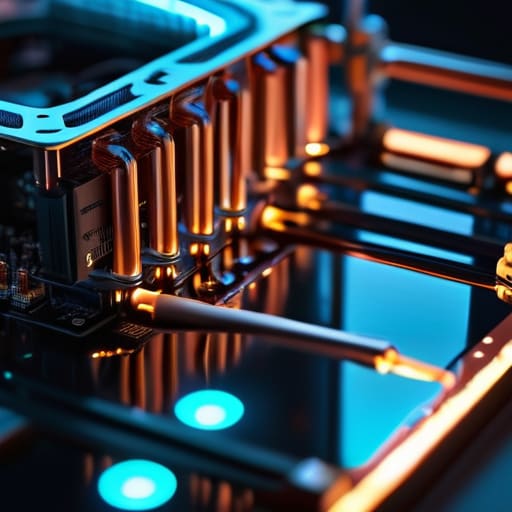
People love to lump everything into one bucket, but if you’re trying to understand the game engine vs middleware distinction, think of it like a custom PC build. The game engine is your motherboard, CPU, and GPU—the core architecture that everything else plugs into to actually function. It handles the fundamental logic, like how a character moves or how the world loads. Middleware, on the other hand, is like adding a dedicated sound card or a high-end liquid cooling loop. It’s specialized third-party game technology that plugs into that core to solve one specific, difficult problem—like making water look realistic or ensuring the physics don’t break when a grenade goes off.
You don’t “build” a game engine from scratch unless you have a massive budget and a decade of spare time. Most devs grab an engine like Unreal or Unity and then layer in middleware to handle the heavy lifting. For instance, instead of writing custom code for every single shadow, they might integrate a specific piece of real-time rendering middleware to handle the lighting. It’s about efficiency; you use the engine to drive the car, and you use middleware to make sure the stereo sounds amazing and the tires actually grip the road.
Don't Get Caught in the Spec Sheet Trap: 5 Real-World Middleware Takeaways
- Don’t mistake a flashy engine for a complete game. Just because a dev uses Unreal doesn’t mean they didn’t plug in three different middleware packages to handle the actual physics, audio, and networking. The engine is the house; the middleware is the plumbing and the wiring.
- Watch for “Optimization Debt.” When a studio layers too many middleware tools on top of each other without tuning them, you end up with a game that eats VRAM for breakfast and tanks your frame rate on even mid-range hardware.
- Look at the genre to judge the tech. If you’re playing a massive open-world RPG, the middleware handling the streaming of assets is more important than the engine’s lighting presets. If the assets pop in while you’re sprinting, the middleware is failing.
- Understand that middleware is why games can actually go multiplayer. Most devs aren’t writing their own netcode from scratch; they’re using specialized middleware to handle the packet loss and latency. When you see “rollback netcode” in a fighting game, that’s a middleware win.
- Don’t let marketing hype fool you about “custom tech.” A lot of times, “proprietary technology” is just a heavily modified version of a middleware suite that the studio has spent years tweaking to squeeze out an extra 5-10 FPS in specific scenarios.
The Bottom Line: Why Middleware Actually Matters
It’s not just extra bloat; middleware is the specialized toolkit that lets devs focus on the actual game instead of wasting months trying to code basic physics or sound propagation from scratch.
Knowing the difference between the engine and the middleware is key to understanding why some games feel polished and others feel like a buggy mess of unoptimized layers.
For the devs, it’s a trade-off between custom control and development speed; for us players, it’s the invisible layer that determines whether a game runs smoothly or eats your GPU for breakfast.
The Real Cost of Building from Scratch
Look, nobody has the time or the budget to reinvent how light bounces off a wall or how a character trips over a pebble every single time they start a new project. Middleware isn’t some mysterious magic trick; it’s just the specialized heavy lifting that lets devs stop worrying about the math of physics engines and start actually making the game worth playing.
Denny Kowalczyk
The Bottom Line: Why the Guts Matter

At the end of the day, middleware isn’t some mysterious black box designed to inflate development budgets; it’s the reason we aren’t still playing games that look like glorified spreadsheets. We’ve looked at how it sits between the raw code and the engine, handling everything from the physics that make a grenade toss feel heavy to the audio engines that make a forest sound alive. Without these specialized tools, developers would be stuck wasting years rebuilding basic math instead of actually polishing the gameplay loop. When you see a game with seamless lighting or realistic cloth physics, remember that it’s rarely one person coding it from scratch—it’s a highly optimized layer of middleware doing the heavy lifting so the studio can focus on what actually makes the game fun.
Next time you’re looking at a massive AAA release or a scrappy indie title, try to look past the marketing hype and the cinematic trailers. Start thinking about the invisible architecture holding the experience together. Understanding middleware doesn’t make you a developer, but it does make you a smarter consumer because you stop seeing games as magic and start seeing them as incredible feats of engineering. Whether it’s a high-fidelity masterpiece or a lo-fi pixel art gem, the tech under the hood is what determines if a game is a technical marvel or a buggy mess. Don’t just play the game; appreciate the stack that built it.
Frequently Asked Questions
If I'm a solo dev or a small indie team, is it actually cheaper to use middleware or should I just try to code my own systems from scratch?
Look, unless you have a PhD in math and zero interest in actually finishing a game, don’t code your own physics or networking from scratch. You’ll spend six months chasing a bug in your collision detection instead of designing levels. For a solo dev, middleware is a massive time-saver. Yes, there’s a licensing fee, but compare that to the cost of your sanity and the thousands of hours you’d waste reinventing the wheel.
Does relying too heavily on middleware make a game harder to optimize or cause weird performance stutters?
Look, it’s a double-edged sword. Middleware is great until you realize you’re running three different black boxes that weren’t designed to talk to each other. When a physics engine and a lighting middleware fight over CPU cycles, you get those micro-stutters that ruin a smooth 144Hz experience. It makes optimization a nightmare because you can’t just tweak the code—you’re stuck fighting how the tool was built, not how the game was made.
How much does the choice of middleware actually impact the final price of a game?
It’s a massive factor, but not always where you think. Developers aren’t just paying for the software; they’re paying for the time it saves. If a studio spends six months coding a custom physics engine from scratch, that’s six months of salaries baked into your $70 price tag. Using middleware might seem like an extra cost on a spreadsheet, but it’s often cheaper than hiring twenty more engineers to reinvent the wheel.
